

Table of Contents
Author’s note: Qualcomm provided travel, lodging and other accommodations associated with Dragonwing IoT Day
As Qualcomm advances its vision for physical AI, recent controversies surrounding intelligent surveillance systems illustrate why technological capability and societal acceptance may follow very different trajectories
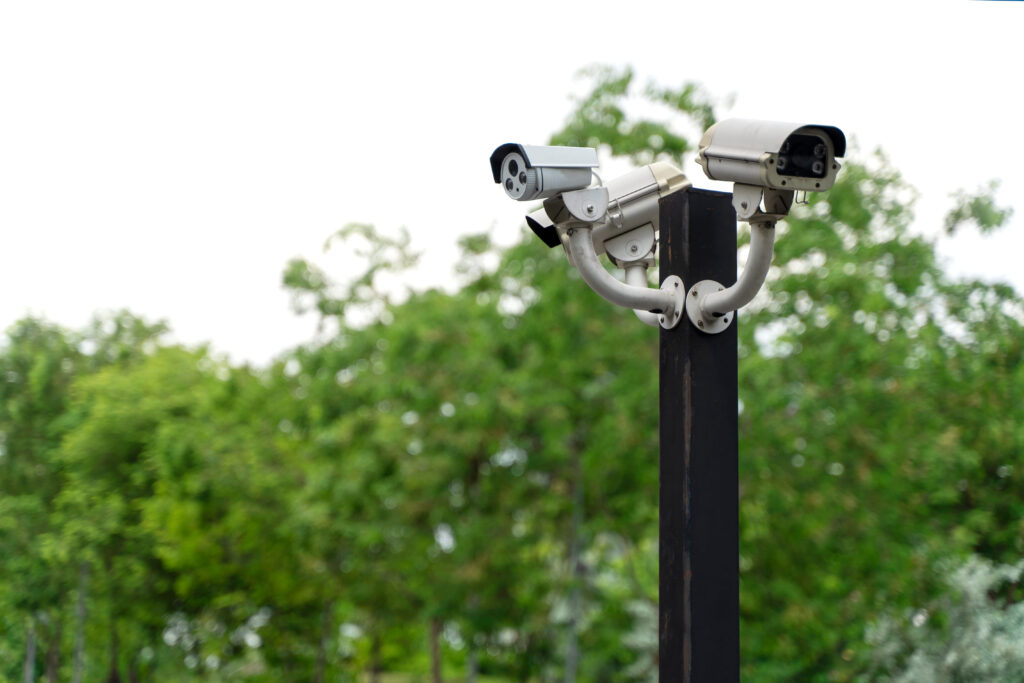
SAN DIEGO — In Siloam Springs, Arkansas, police recently covered six automated license plate readers with black bags. The unusual measure followed an October 20 vote by the city’s Board of Directors to deactivate its Flock Safety cameras while reviewing the municipal contract. The physical coverings provided additional assurance that the cameras would stop collecting images.
Just a few miles away, in Fayetteville where I live, the City Council unanimously approved an ordinance prohibiting city funds and property from being used for automated license plate reader systems. The prohibition was preemptive; the police department had not adopted the technology.
Meanwhile, in Los Angeles, the city has allowed a proposed deployment of Axon license plate readers to move forward despite lingering concerns about privacy, data sharing and surveillance. The LAPD previously declined to renew its agreement with Flock over concerns about how collected information could be accessed and used.
These examples illustrate the difficulty of determining societal acceptance of emerging technologies. They also provide an interesting expansion of the discussions at Qualcomm’s Dragonwing IoT Day about the evolution of robotics and physical AI. These are cameras, not robots. If communities are still debating the acceptable uses of intelligent surveillance systems, what happens when machines imbued with vision begin acting autonomously in shared physical environments?
From capturing images to understanding environments
“Cameras are going to be in the middle of every single thing we do,” Nakul Duggal, Qualcomm’s executive vice president and group general manager of automotive, industrial and embedded IoT, and robotics, said during his keynote presentation.
Duggal described computer vision as foundational to situational awareness, converting visual information into an understanding of the physical world. Qualcomm has spent many years developing the associated capabilities for smartphones and automotive applications. Its Dragonwing strategy extends those technologies across industrial systems, intelligent infrastructure and robotics.
One manifestation is the Qualcomm Insight Platform, an edge-first, AI-powered video software-as-a-service offering that moves beyond conventional video recording and monitoring. The platform combines computer vision with vision-language models to transform video into contextual, searchable information. Its Merlin generative AI assistant — which was demoed this week at Dragonwing IoT Day — allows operators to query footage using natural language, generate incident summaries and establish alerts tied to particular people, objects or behaviors.
AI inference runs directly on cameras or local edge appliances, limiting the need to transmit raw video to centralized computing resources. The architecture can improve response times, reduce bandwidth requirements and support privacy protections by keeping footage on-site while selectively sharing metadata and events.
Applications range from industrial safety monitoring and security to retail operations, transportation and smart cities. The value proposition is that cameras can provide continuous situational awareness, enabling organizations to identify problems, understand operating conditions and make better decisions.
But the same technological capabilities that make intelligent cameras useful can produce very different reactions depending on where they are deployed, what information they collect and how that information is used.
The problem of contextual acceptance
The debate surrounding Flock illustrates that distinction. Automated license plate readers provide law enforcement with a means of identifying vehicles associated with criminal investigations, locating stolen cars and supporting other public safety functions. Police departments can point to legitimate operational benefits.
Objections often concern the aggregation and accessibility of information rather than the cameras themselves. A device that captures a license plate is different from a network capable of creating searchable records of vehicle movements over time.
In Siloam Springs, a resident raised precisely that distinction. “Does the right to observe someone in public automatically create the right to record, store, index and search the movements over time?” the local asked, according to reporting from 40/29 News.
The outcomes are not uniform. Fayetteville has chosen a preemptive prohibition on municipal ALPR systems, with exceptions including existing parking enforcement. Siloam Springs has suspended its deployment pending further review. Los Angeles is proceeding with a pilot involving a different supplier, Axon, and additional data-governance safeguards, even as some residents and elected officials continue to object.
Axon highlighted its relationship with Qualcomm during Dragonwing IoT Day, discussing the use of Qualcomm technology in body-worn cameras and pole-mounted platforms similar to Flock’s primary product. Separately, Flock identifies Qualcomm as a supplier of components for its devices. That established relationship should not be confused with any assertion about the technology powering the proposed Los Angeles license plate readers.
None of this establishes that intelligent cameras are inherently undesirable or that their suppliers are acting irresponsibly. It demonstrates that societal acceptance cannot be treated as a uniform function of technological capability or operational utility. The technology might be acceptable in one jurisdiction, objectionable in another and conditionally acceptable in a third.
Robotics introduces another dimension
Duggal addressed a similar problem in discussing how robotics is evolving from inspection and transportation toward dexterous manipulation, multi-agent fleets and direct interaction with people. The progression introduces increasingly complex technical requirements. But Duggal explicitly identified “societal acceptance” as another consideration, distinct from whether a particular robotic task can be performed.
He set it up this way during his keynote: Would customers accept a robot cleaning a retail restroom? Probably. What about robots stocking shelves while people shop? Opinions may differ. In a subsequent discussion, Duggal characterized the distinction even more directly. “My framework on robotics is, are there humans present or absent?”
He explained that substantial robotics adoption is already occurring outside public view. Environments without humans offer significant opportunities because the risks associated with autonomous operations are fundamentally different. This suggests that the commercial trajectory of robotics will be shaped by the interaction of technological maturity, operating environment, perceived risk and social expectations.
And societal acceptance doesn’t need to (and potentially cannot) correlate neatly with technical sophistication. A highly autonomous robot performing dangerous industrial work in an isolated environment could face fewer acceptance barriers than a comparatively simple machine navigating a crowded public space.
Adding mobility and physical manipulation also introduces considerations beyond those associated with intelligent cameras. A robot can act upon its environment, potentially creating immediate physical consequences for people sharing that space.
What acceptance means for Qualcomm
Duggal suggested that questions surrounding societal acceptance could be resolved over the next three years as rapidly advancing technology forces decisions about which applications people will accommodate. That does not necessarily mean resistance will disappear. Rather, different industries and communities may establish different boundaries for acceptable autonomy. Much like the efficacy of AI, societal acceptance is very much contextual.
For Qualcomm, this variability seemingly reinforces the logic of a horizontal technology platform capable of supporting numerous specialized applications. Its opportunity is not contingent on a single vision of generalized robotics achieving universal acceptance. Industrial inspection, autonomous transportation, collaborative manufacturing, intelligent cameras and eventually domestic robotics can advance along different adoption trajectories while drawing on common capabilities in compute, connectivity, sensing and AI.
Qualcomm can engineer the technologies that make these applications possible. Manufacturers, enterprise customers, governments and communities will ultimately determine where and under what conditions they are deployed. The most difficult bit of alignment here is that technological readiness does not automatically establish market readiness. A product can perform its intended function, demonstrate economic value and still encounter resistance arising from its operating context.
The black bags covering cameras in Siloam Springs make that uncertainty tangible and visible. As perception evolves toward autonomous action, the question becomes increasingly consequential. Physical AI will expand what machines are capable of doing. Determining what people are willing to let them do is a different challenge with answers that may vary considerably from one application, organization or community to another.