Susana Schwartz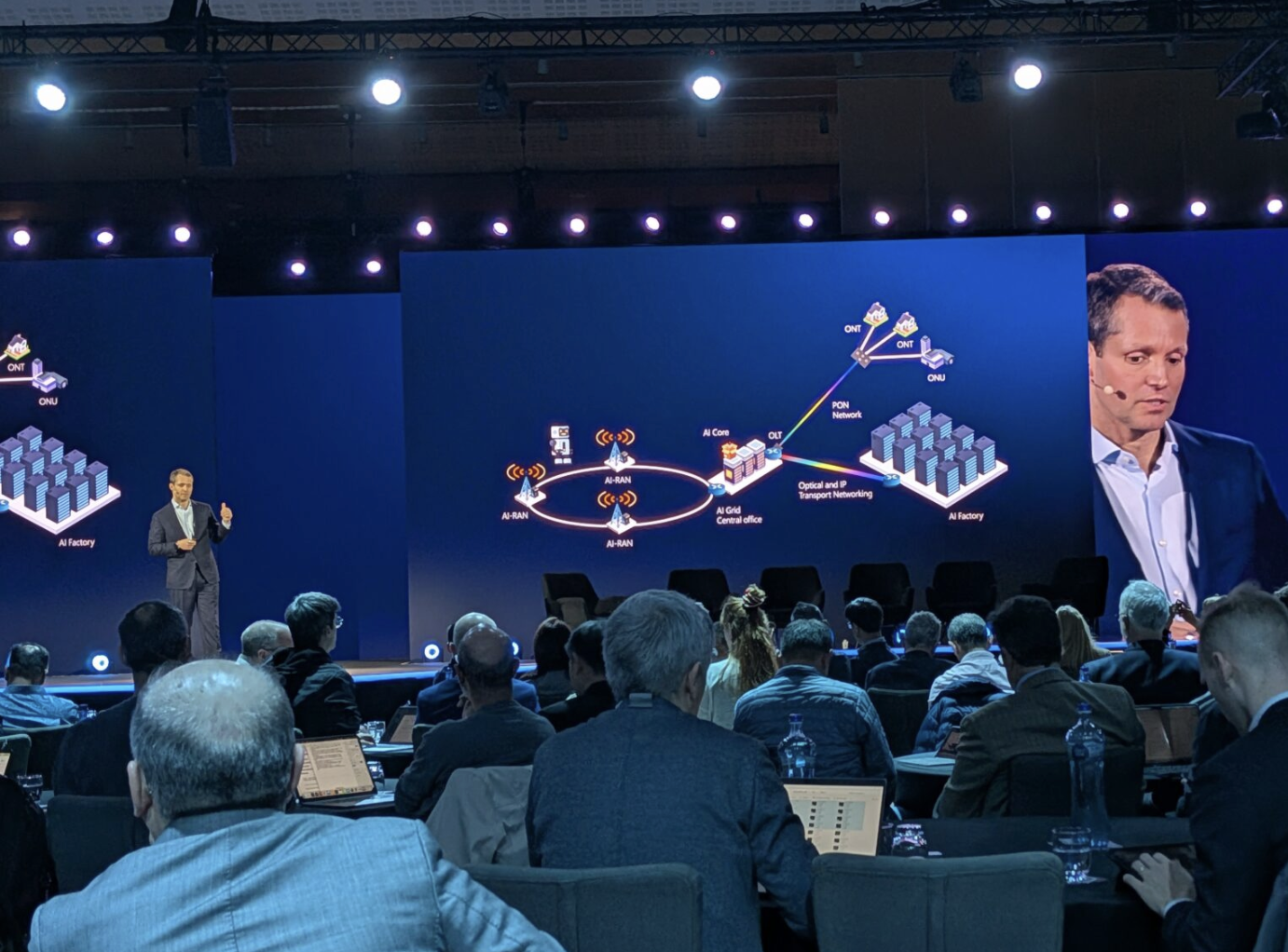
AI permeates MWC Barcelona announcements
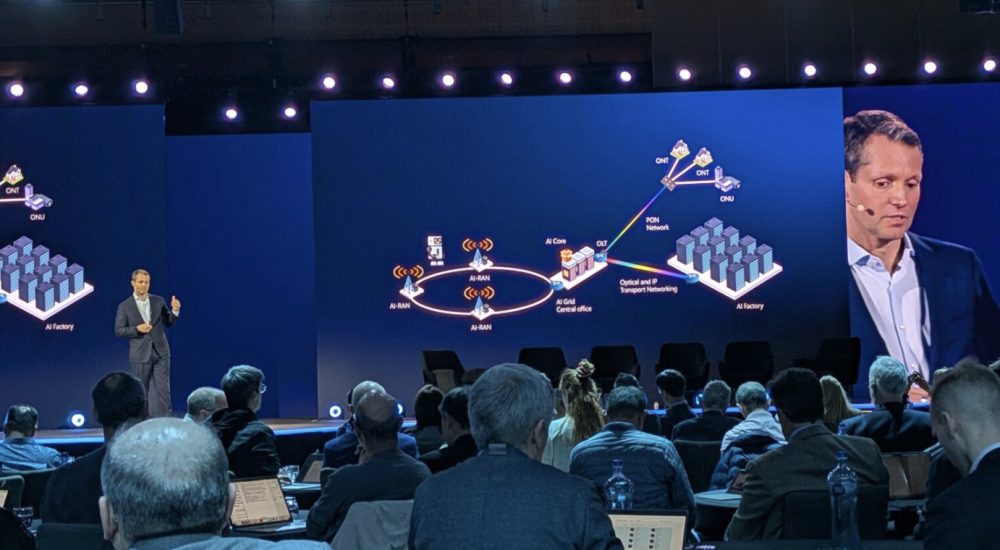
AI workloads require a total structural reset in networks, with AI traffic transforming from human-to-machine tokens to machine-to-machine engagements, said Nokia chief executive Justin Hotard, speaking during the session, “Keynote 10: Blueprints for the Intelligent Future” at MWC Barcelona 2026. “Networks evolve with workloads – voice, data, video, and now, suddenly, with AI: 100 trillion tokens per day, 77 exabytes of data per month, 1.3 trillion sessions (“discrete AI engagements”) per year,” Hotard explained, adding that AI is “already a scaled workload.” He said mobile is “the default access for 53.5% of traffic, making AI ‘mobile native.'” To see more of what he had to say about machine-to-machine engagements, physical AI, and more, check out RCRTech’s reporting, here.
- NTT advancements in IOWN and AI-resilient infrastructure; transmission and processing of high-volume data handled by AI agents; IOWN APN-facilitated AI video analysis for 6G networks; and optical quantum computing.
- Google made announcements about Autonomous Networks and Network Digital Twins andnew agentic AI Agents.
Nvidia and global telecom leaders committed to building 6G on open and secure AI-Native platforms.
- Nokia and NVIDIA achieved the first AI-RAN powered 5G call, using GPUs to run network and AI workloads simultaneously for better efficiency.
- Huawei’s launched AI-centric network solutions (ADN L4) designed for autonomous “smart factories” and infrastructure, focusing on real-time analytics and predictive maintenance.
- Qualcomm positioned 6G as a requirement for the “AI revolution,” predicting AI will account for 30% of all cellular traffic by 2034.
- Samsung bolstered its agentic ecosystem with the Galaxy S26 series, which proactively anticipates user intent.
- Deutsche Telekom and Perplexity announced an “App-less” AI Phone that performs tasks like booking flights or taxis via a voice-controlled “Magenta AI” interface, without traditional apps.
- HONOR’s “Robot Phone”: The Robot Phone with physical AI capabilities, with a 200MP camera

Susana Schwartz
Technology Editor
RCRTech
AI Infrastructure Top Stories
Nokia MWC keynote: AI is already a scaled, mobile-native workload, which is forcing networks to evolve from SLA-driven capacity models to deterministic, programmable architectures that connect data centers, transport, and the edge.
Deutsche Telekom AI focus: DT is making AI-based services and AI technologies front and center at MWC, with a foundation of AI-optimized fiber-optics that will provide high-speed, ultra-low latency infrastructure for massive AI workloads.
So. Korea AI buildouts: South Korea is accelerating investment in AI data centers and semiconductors in an effort to become a leading AI power, according to Lian Jye, chief analyst at Omdia, in an interview with RCR Wireless News.
AI Today: What You Need to Know
Amazon (AWS) drone incidents: AWS confirmed two data centers in the UAE were hit by drone strikes, with a third facility in Bahrain also damaged, causing significant service outages. AWS warned that instability is likely to continue.
SIA opposes Chip Security Act: The Semiconductor Industry Association (SIA) issued a formal statement opposing the “Chip Security Act,” warning that mandatory, untested on-chip security features could erode global trust in U.S. technology.
Nvidia $2 billion Lumentum pledge: NVIDIA announced multiyear strategic agreements with Lumentum Holdings to accelerate innovation in advanced optics technologies, including R&D for next-gen AI infrastructure and systems designs.
NTT DATA Expansion: Hyperscale and enterprise clients are driving NTT DATA’s Global Data Center business, which has secured nearly 115MW in capacity across campuses in Gainesville, Virginia; Chicago, Illinois; and Sacramento, California. E
Google DC boasts “largest battery system”: Google is behind the secretive Duluth-area DC project in Minnesota, expected to produce 700MW of energy and 100 hours of power through the “world’s largest battery system.”