
 Susana Schwartz
SPEED ACT: Clean energy vs. rapid permitting
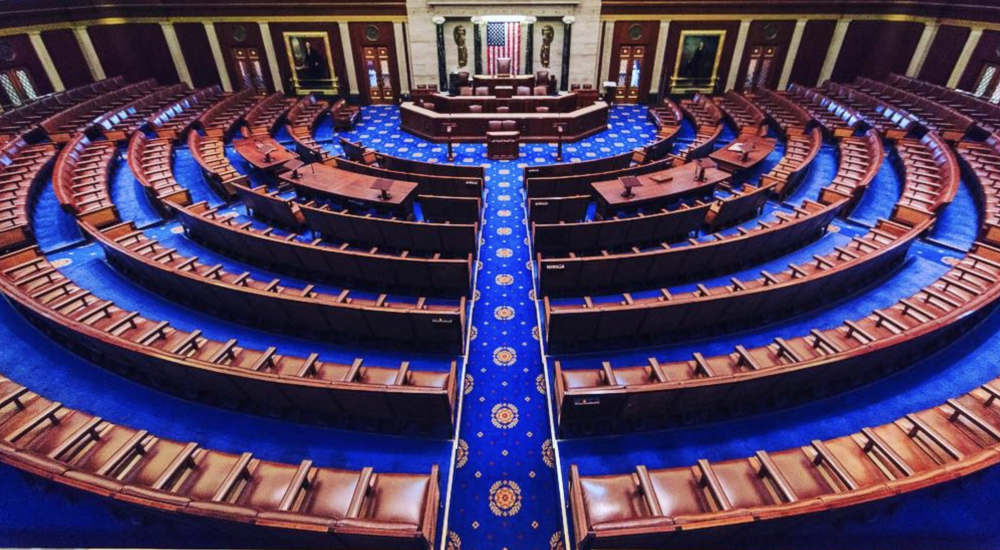
Today, a final House vote on the SPEED Act will take place — an attempt to reform the National Environmental Policy Act, with language that would “rein in the endless delays and lawsuits that have stalled critical infrastructure, energy, and conservation projects across the country.” Ultimately, if passed, it would allow the Trump administration to review and rescind permits for offshore wind developments. This pits federal oversight against state/local control over energy/infrastructure projects.
Though touted as a “bipartisan bill,” Democrats, like Martin Heinrich, Sheldon Whitehouse, and Brian Schatz, have argued that the legislation weakens environmental protections and limits judicial review. Other Democrats have expressed interest in a broader, genuinely bipartisan permitting reform package, but would like to see amendments that protect consideration of new science in reviews, prevent agencies from ignoring established permits, and ensure judicial recourse if the act is violated.
House Republicans made concessions on some of these amendments to secure enough votes to advance the bill for a final floor vote today. If passed, the legislation moves on to the Senate, where it’s expected Democrats will push to protect renewable energy projects.

Susana Schwartz
Technology Editor
RCRTech
AI Infrastructure Top Stories
Maybe 6G isn’t so critical for AI?: IEEE Senior Member David Witkowski says only 7% of tech leaders surveyed view 6G as a top area for AI impact — a notable finding coming from a technology often described as AI-native.
NTT discusses cooling, power, and expansion: NTT Global Data Centers COO Joe Pace discusses how to “stay ahead of customers’ needs” as chips and servers consume more power, upgrading existing sites and building AI-ready data centers.
AI’s a game changer: Tail spend accounts for 20% of procurement budgets, with telcos combining AI and HI — the former for procurement, the latter for context around delivery failures, geopolitical exposure, and ESG non-compliance.
AI Today: What You Need to Know
SPEED ACT passes major hurdle: The House of Representatives on Tuesday advanced The SPEED ACT, which OpenAI, Meta, Microsoft, and other AI players hope will expedite federal permits for AI infra builds and semiconductor production.
Tech Force established for U.S. AI supremacy: The Trump Administration’s “Tech Force” will hire 1000 technologists and supervisors into federal agencies for to tackle AI implementation, application development and data modernization.
Asia’s AI boom is reshaping cooling needs: Gartner, Castrol say Asia’s data centers are establishing a new normal for liquid cooling‘s thermal conductivity, which removes up to 80% of the energy used for cooling in newly designed data centers.
China’s ‘Manhattan Project’ for AI chip dominance: In a high-security lab in Shenzhen, a major breakthrough in advanced semiconductor technology has taken place, with a prototype EUV lithography machine for producing advanced AI chips.
AI brought smarter cyberattacks in 2025: Generative AI has transformed phishing, the most common entry point for cyberattacks, with near-flawless imitations of trusted communications, capable of reaching millions in seconds.
AI infrastructure stocks are taking a beating: AI shares related to AI infrastructure are on shaky ground, as concerns about high levels of debt and lack of concrete ROI rattle investors watching multibillion-dollar deals.