Susana Schwartz
SpaceX IPO: will Wall St. fund data centers in space?
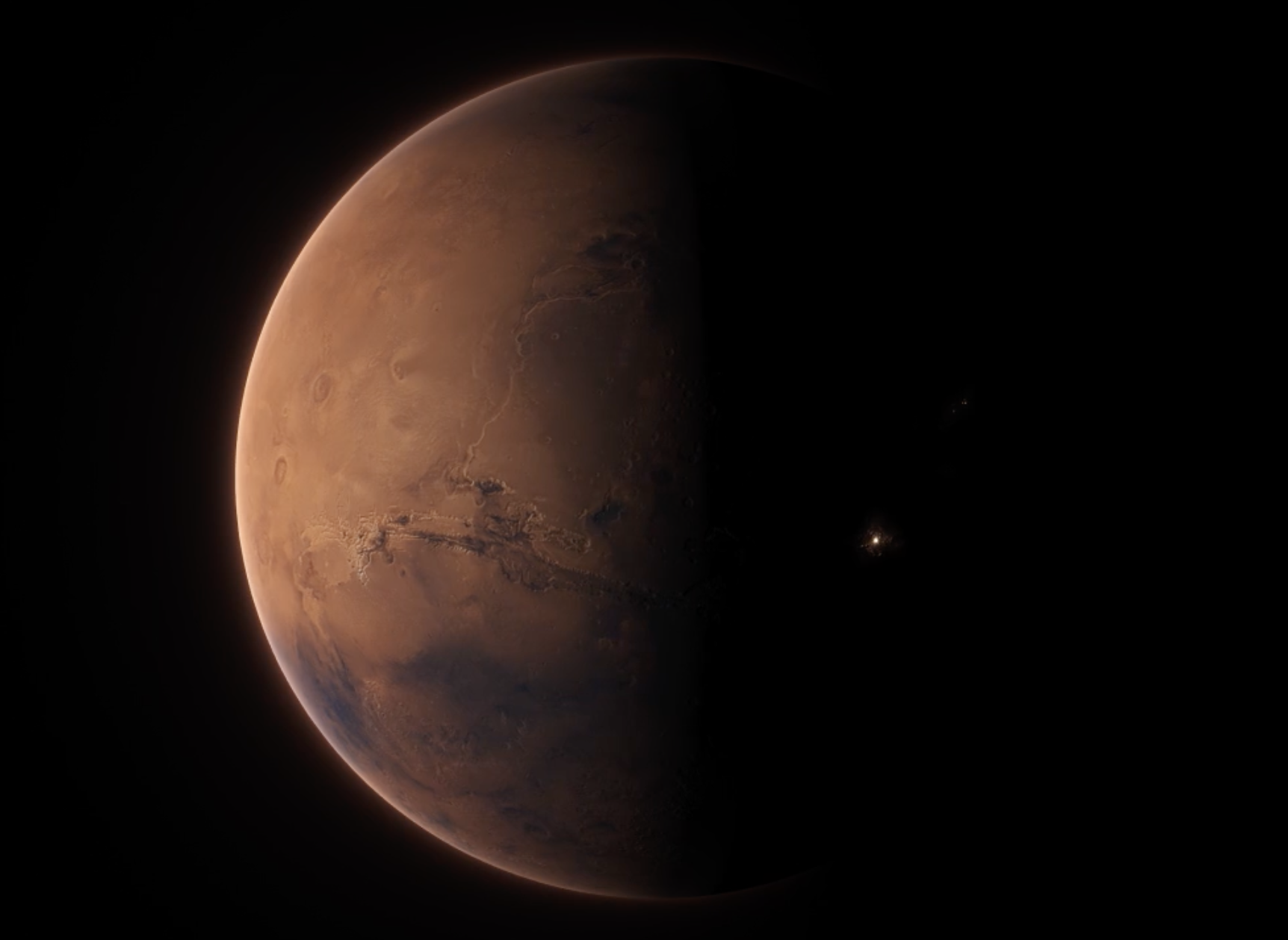
The same day Artemis II successfully launched for the moon, SpaceX sought its moonshot with a confidential IPO, Project Apex, to raise $50 billion and $75 billion for orbital data centers. Analysts estimate a post-IPO valuation for SpaceX could go as high as $1.5 trillion to $1.75 trillion. The primary goal in Elon Musk’s orbital data center initiative is Artificial Superintelligence (ASI). Many analysts, scientists, and other experts have argued that current terrestrial power capacity is sufficient to support human-level needs and current AI workloads. In fact, just yesterday, the World Economic Forum posited that “the world doesn’t need more power, but rather a smarter energy grid.” But, SpaceX and other ASI proponents like Google (with PlanetLabs), Nvidia (with StarCloud), Microsoft, and Microsoft (with Axiom), argue it’s physically and economically impossible to scale Earth’s power grid to the terawatt (TW) levels required for future ASI. For now, there is rising debate about the viability, and the impact on not only the night sky for most of humanity, but for science, for atmospheric and environmental damage, as well as global sovereignty for all nations (if one company grabs up all the celestial “real estate,” leaving little for other countries). Debates are growing around whether massive AI computing infrastructure in space is a viable solution to Earth’s energy and land constraints, or a potentially reckless strategy that will do irreparable harm. RCRTech will follow the story as it evolves.

Susana Schwartz
Technology Editor
RCRTech
AI Infrastructure Top Stories
Significance of Nvidia – Marvell deal: By making Marvell a go-to partner for connectivity, Nvidia gets a rack-scale solution engineered for AI infra and next-gen networks, while enterprises get more future-proof, heterogeneous AI infrastructure.
Why TurboQuant matters: Google Research’s TurboQuant solves a key problem in LLMs: the key-value cache remembers “context” when working through a conversation or a long document, which consumes tremendous GPU memory.
Blue Origin – Starlink race: Blue Origin’s push into orbital DCs is about “staking a claim than demonstrating parity with Starlink”, says Frost & Sullivan’s Pravin Pradeep, who delves into the value of optical inter-satellite links.
AI Today: What You Need to Know
AMI Labs raises $1B+: Yann LeCun’s AI startup, AMI Labs, raised $1.03 billion in Europe’s largest-ever seed round for physical AI “world models.” The round included Cathay Innovation, Greycroft, Hiro Capital, HV Capital, and Bezos Expeditions.
OpenAI pulls Sora app: OpenAI discontinued its Sora video generation app, halting user access to the tool. Deepfakes of people doing outlandish things led to an outcry by advocacy groups, academics and experts concerned about its impacts.
Anthropic fixing Claude limits: Anthropic is increasing Claude limits after ProPlan and Max plans were burning through usage faster than expected. In addition, Anthropic is trying to plug the hole of 512,000 lines of leaked source code.
AI Energy Demands: Siemens and Rittal are partnering to address high-density power requirements with standardized, high-performance power distribution solutions designed for the rapidly growing energy demands of AI data centers.
China 5-year plan: China has approved its15th Five-Year Plan, which groups AI with quantum computing, biotechnology, and energy as paths to the the country’s strategic science policy. It calls for more AI chips and the software to support them.
Underautomation in enterprise?: DeepL’s new report on “borderless business” shows enterprise content has exploded, yet 68% of companies rely on outdated translation workflows – despite broad AI investment across business functions.