Christian de Looper
From capacity to coordination
Yesterday we led with the quarter-trillion dollars piling into AI infrastructure. Today, the money is moving downstream — from raw compute to the tools, networks, and models that determine whether any of it actually works.
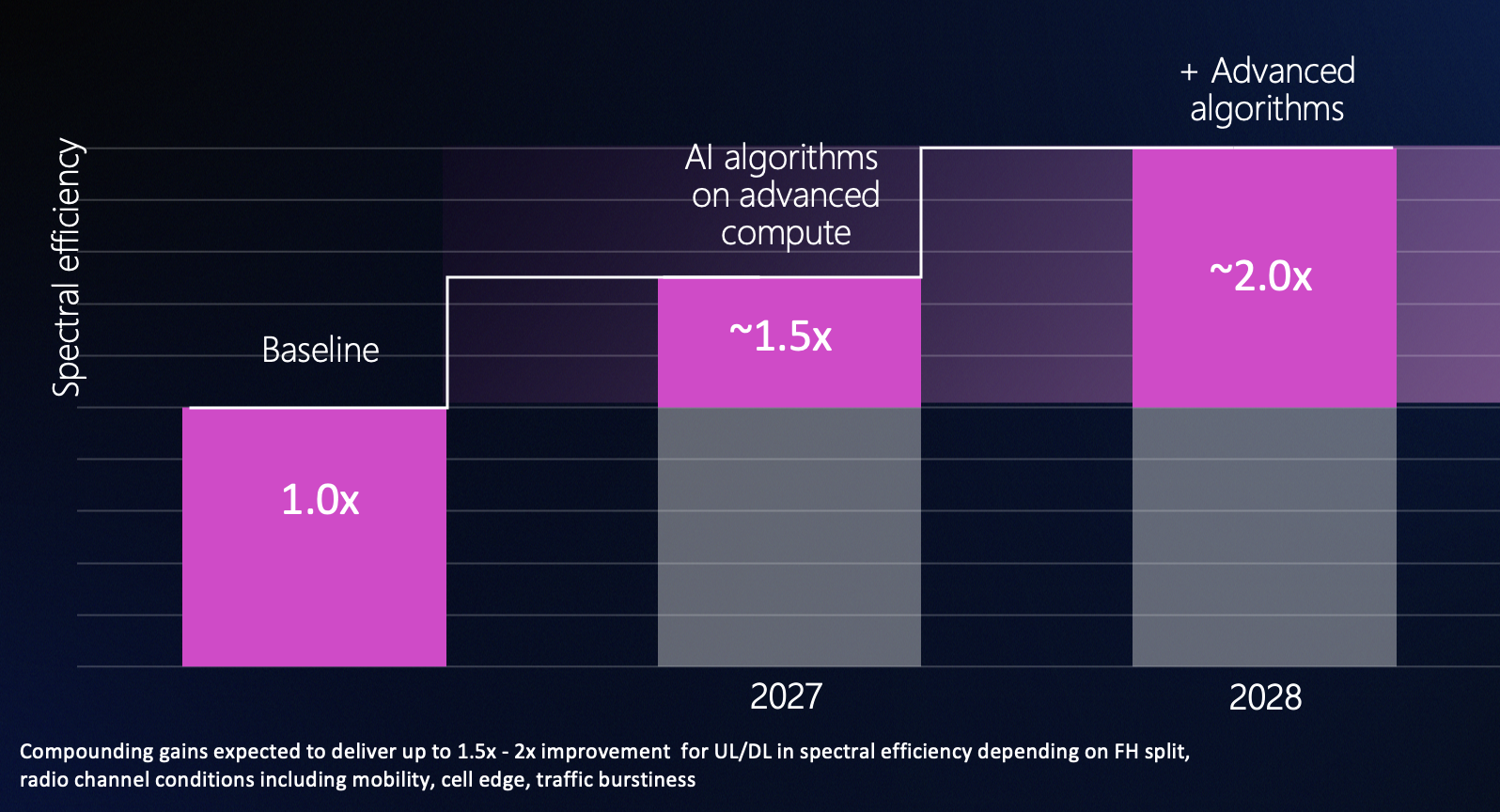
Synopsys shipped agentic AI workflows that cut chip debug cycles by 25–40%, and AMD is already evaluating them on live AI silicon. That matters because the design tools are becoming the bottleneck: you can pour billions into fabs, but if verification takes months, the silicon sits idle. AI-RAN is crystallizing fast too. Nokia, TELUS, and analysts are converging on Open RAN as the programmable foundation for AI-native networks, and Nokia is claiming a path to 100% spectral efficiency gains by 2028 — though TELUS warns the real challenge is governed production, not lab demos. And SK Telecom dropped A.X K2, a 688-billion-parameter open-weights model, onto Hugging Face.
These three stories share a throughline — the hard problem has shifted from capacity to coordination. Synopsys is coordinating design agents. AI-RAN is coordinating spectrum, compute, and workloads on one programmable fabric. And SK Telecom is coordinating a sovereign AI stack — model weights, deployment pipelines, industrial use cases.

Christian de Looper
Editor
RCRTech
AI Infrastructure Top Stories
SK Telecom’s sovereign AI model A.X K2 arrives: A 688-billion-parameter open-weights model hits Hugging Face, with deployments planned across manufacturing, defense, and healthcare.
AI-RAN takes shape as three architectures converge: Nokia, TELUS, and analysts see Open RAN as the programmable foundation for AI-native networks, targeting 100% spectral efficiency gains by 2028.
Synopsys ships agentic AI for chip design and verification: Multi-agent workflows on Microsoft Discovery claim to cut debug cycle times by 25-40%, with AMD evaluating on AI silicon — though production tapeouts remain undisclosed.
AI Today: What You Need to Know
Anthropic’s Texas data center: Banks are negotiating a $15 billion loan for a 1.6 GW campus, with Google backstopping the lease for a ~20% stake in the project.
Microsoft’s swappable models: Nadella told investors any model is “swappable” while touting MAI models at 30% better per dollar and 40% better per watt.
Xsight Labs funding: The chipmaker raised $300+M at a $2.8 billion valuation, with its 800G DPU and 12.8 Tbps switch under evaluation at Tier-1 hyperscalers.
PJM power curtailment: Starting June 2027, new data centers over 50 MW face mandatory curtailment during capacity shortages unless they bring their own generation.
Openchip RISC-V chip: Barcelona-based Openchip delivered an industrial-grade chip in 2.5 years on an advanced process, targeting AI and HPC workloads for European critical infrastructure.