
 Susana Schwartz
Impact of EO 14420 on data center supply chains
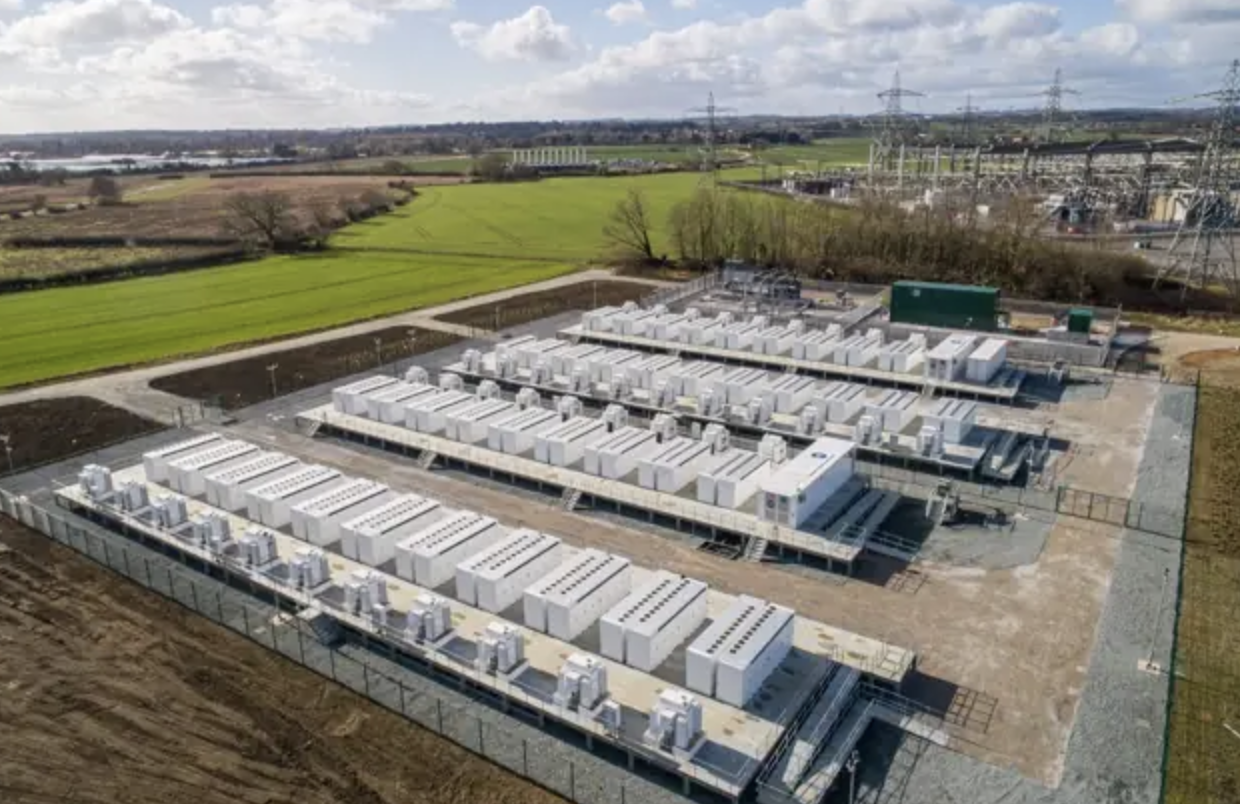
A week ago, President Trump signed Executive Order 14420, which details security risks associated with data centers, AI, and advanced manufacturing. In particular, it applies to high-voltage infrastructure operating at or above 69 kV, spanning not only physical equipment — transformers, inverters, generators, and BESS — but also associated software, firmware, and remote-access capabilities.
Because the EO takes effect retroactively, data center developers and utilities may face significant challenges in terms of compliance and deployment of foreign-produced bulk-power system equipment linked to China, Russia, and other countries deemed national-security risks. Its retroactive nature authorizes the DOE to audit, prohibit, or restrict transactions equipment already installed in the ground.
BESS might face the greatest disruption since its supply chain is dominated by Chinese manufacturers, with even domestic systems including Chinese-origin cells and battery management systems. The intent is to change Chinese pervasiveness in the supply change, with tax credits and DOE and Department of Defense/War funding that over time may increase domestic BESS and supply chain production.
Some policy experts from organizations like the Atlantic Council commend the intent to address digital backdoors, malware, and other vulnerabilities posed by “foreign’ entities’” equipment. But, they also acknowledge that in the short term, the disruption will be real, since the industry is plagued by severe shortages of power transformers and substations. Wood Mackenzie, for example, says there’s an estimated market shortage of 15% and 8%, respectively, with data center developers using approximately $22 billion of imports since last year to minimize lead times.
For now, uncertainty around the scope of the order is pervasive, as analysts and legal experts are unsure about how the bulk power definition relates to data center loads, which makes it difficult to predict the EO’s impact. As the DOE interprets the order over the following months, more clarity is expected.

Susana Schwartz
Technology Editor
RCRTech
AI Infrastructure Top Stories
AI’s relationship to optical networks: What does AI need from optical networks as operators push toward 400G, 800G and 1.6T? RCR’s Sean Kinney examines a shift in priorities as AI workloads impact performance, power, telemetry and automation.
MTN – AI Ashram partner: MTN Group is targeting 150MW of AI-ready data center capacity in South Africa and Nigeria with UAE-based AI Ashram, a partnership complemented by Bayobab, which will provide open-access connectivity.
AI Today: What You Need to Know
CPP – Equinix acquisition of atNorth: Canada Pension Plan Investment Board and Equinix, Inc. completed the acquisition of atNorth, a Nordic DC developer and operator with high-density colocation and built-to-suit data facilities.
Nokia back on Euro Stoxx: Nokia is benefiting from rising demand for AI and cloud infrastructure, returning to the Euro Stoxx 50 benchmark index ater a one-year absence. Nokia reported Q2 revenue of €4.815 billion ($5.5 billion), up 8% YoY.
Is CoreWeave undervalued?: CoreWeave posted Q2 2026 revenue of $2.6 billion, a 112% jump from the same period last year. The company’s contracted revenue backlog now exceeds $104 billion, with $25 billion in commitments lined up for Q3.
HVAC sensors on the rise: HVAC sensors for data centers is a market projected to reach USD 1510 Million by 2035, registering a CAGR of 12.5% from 2026 to 2035. Deployment of sensors supports hybrid air and liquid cooling architectures.
Taiwan NT$8 trillion in chip output: Taiwan aims to raise semiconductor industry output above NT$8 trillion (US$251.8 billion) this year. Its total output has grown from NT$5.3 trillion in 2024 and NT$6.5 trillion in 2025.
RCR Events
Industry Resources
Report: NTN in motion — evolving standards, expanding services