

Table of Contents
Martina Raveni, senior analyst at research firm GlobalData, told RCR Wireless News that space is a promising approach to address the upcoming energy crunch that threatens to hinder AI development.
In sum – what to know:
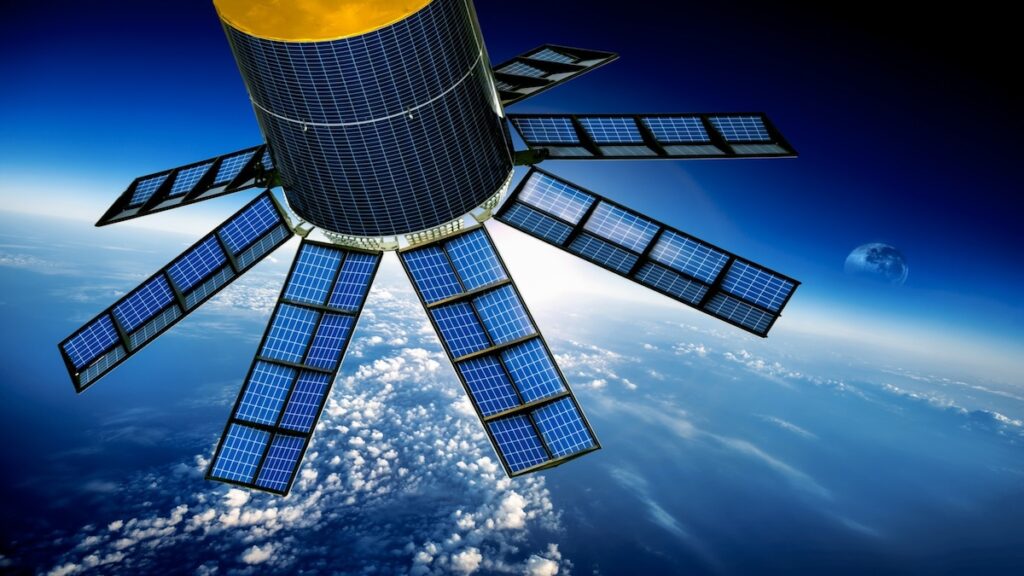
AI goes into orbit – CASC plans gigawatt-class space-based data centers that integrate computing, storage and connectivity to process data directly in space.
Energy strategies – Space-based solar power is positioned as a solution to the growing energy demands of large-scale AI workloads.
US competition – The initiative parallels SpaceX’s orbital AI data center plans, highlighting rising commercial and strategic rivalry in space infrastructure.
China is planning to deploy artificial intelligence data centers in space over the next five years, according to state media reports, signaling Beijing’s intent to move energy-intensive computing workloads into orbit as part of its long-term technology and space strategy.
China Aerospace Science and Technology Corporation (CASC), the country’s main space contractor, has committed to building what it describes as “gigawatt-class space digital-intelligence infrastructure,” according to a five-year development plan cited by state broadcaster CCTV. The initiative aims to create space-based computing platforms capable of processing data directly in orbit rather than transmitting it back to Earth.
According to the report, the proposed space data centers would integrate cloud, edge and terminal capabilities, combining computing power, storage and transmission bandwidth in orbit. The approach is intended to support large-scale AI workloads while reducing reliance on terrestrial energy and data center infrastructure.
The announcement comes as Elon Musk-led SpaceX is pursuing similar ambitions. Musk recently said that SpaceX plans to deploy solar-powered AI data-center satellites within the next two to three years, funded in part by its planned $25 billion initial public offering.
“It’s a no-brainer building solar-power data centers in space… the lowest-cost place to put AI will be space and that will be true within two years, three at the latest,” Musk previously said at the World Economic Forum in Davos. He added that solar generation in orbit can produce five times more power than panels on Earth.
China’s plans also align with a December CASC policy document that outlines the creation of an industrial-scale “Space Cloud” by 2030. The document identifies the integration of space-based solar power and AI computing as a core component of China’s upcoming 15th five-year plan.
“When it comes to AI data centers in space, there are varying stages of development and ambition. In terms of feasibility, space is a promising approach to address the upcoming energy crunch that threatens to hinder AI development. Space is very cold, which simplifies the notorious cooling issues; the unlimited solar power available brings down energy costs; and the decreased rocket launch costs achieved in recent years expand space accessibility. However, operating in space brings its own challenges, including extreme temperature swings, radiation, and space debris,” Martina Raveni, senior analyst at research firm GlobalData, told RCR Wireless News.
“Considering the latest announcements from China and the U.S. [specifically Elon Musk’s SpaceX and its recent IPO], the magnitude of investments in this area, coupled with advances in launch technology and satellite communications, is making space data centers increasingly feasible. While both players are quite optimistic about timelines, GlobalData believes a longer timeframe may be more realistic,” Raveni added.