Susana Schwartz
Helios high-fidelity quantum computer to be installed in Oracle OCI AI data center
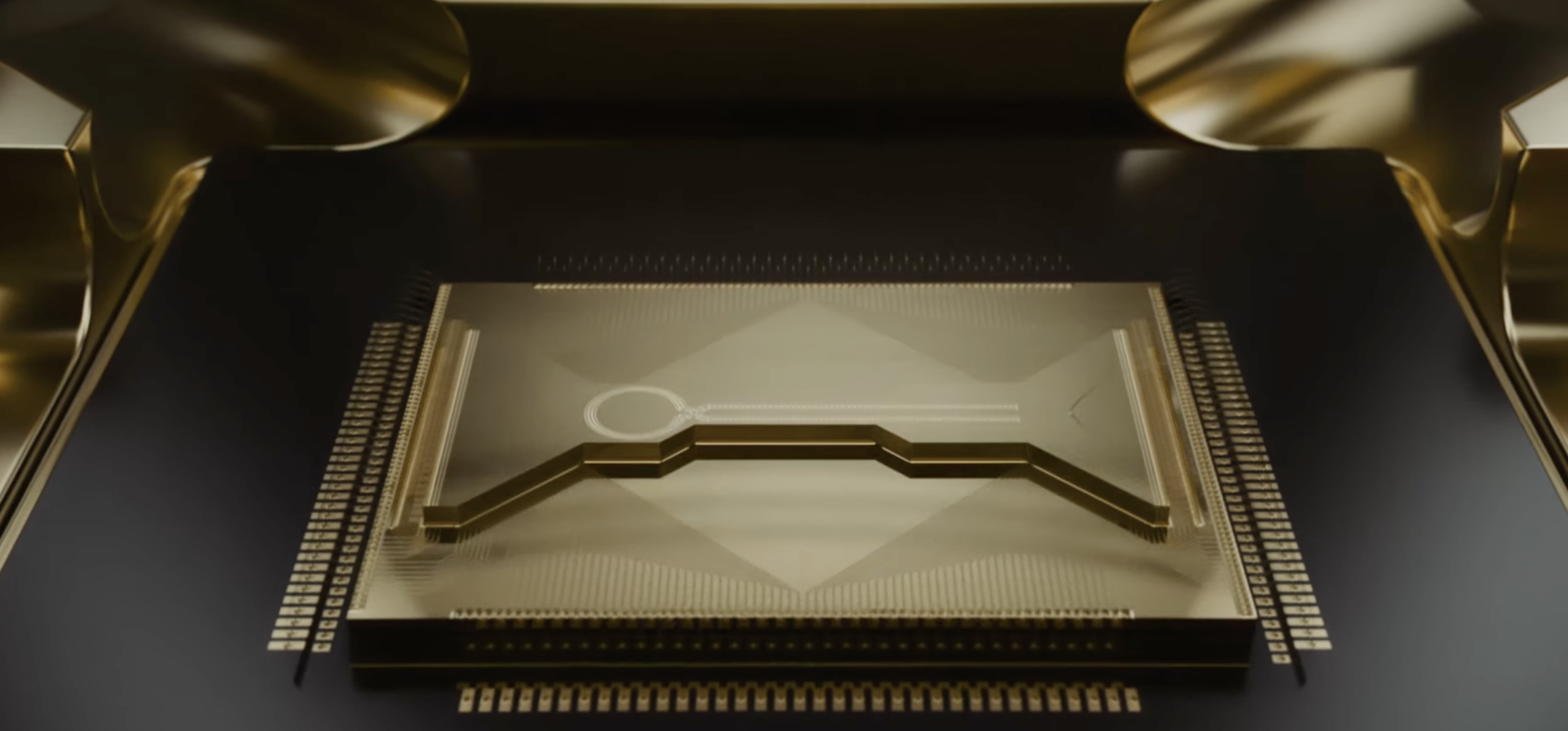
Quantinuum and Oracle today announced they will partner to physically place a high-fidelity quantum computer directly inside Oracle’s AI data center (as opposed to routing workloads through external network brokerage).That means the Helios trapped-ion quantum computer will be directly accessible through Oracle Cloud Infrastructure (OCI), creating a a classical-quantum hybrid that will give OCI customers broad access to quantum computing for their most computationally intensive challenges.
With quantum hardware sitting on the same network fabric as Oracle’s GPUs, it’ll be possible for algorithms to pass data between the quantum and classical systems with almost zero latency. For enterprises, research institutions, and universities, that opens up a world of possibilities, with the ability to evaluate billions of combinations of variables and risk factors to stress-test things like derivatives portfolios or to route massive vehicle fleets with complex scheduling challenges. It means financial institutions could detect highly distributed fraud patterns against millions of daily transactions in real time, or that pharmaceuticals could simulate exact electronic structures and molecular interactions of proteins. For energy companies, it could mean optimizing the flow of electrical grids and dynamic responses to unpredictable and volatile events (like weather). And for learning institutions, there can be simulations of subatomic particle interactions and quantum field theories, as well as error-correction and hybrid quantum-classical algorithms on real hardware.
For computer scientists and physicists, this is an exciting engineering milestone in that Helios can achieve an average two-qubit gate fidelity of 99.921%, though for those paying the cloud bills, there might be a little less enthusiasm. Pricing has not yet been announced, but quantum cloud services are typically billed per-shot/task; per-gate/operation; or through monthly reservations that rent the machine for a specific window of time (usually at thousands of dollars per hour).

Susana Schwartz
Technology Editor
RCRTech
AI Infrastructure Top Stories
NTT Data $634 million DC investment: NTT Data reported $634 million in data center investment during the April-June 2026 period, and $733 million in data center sales. Total net sales were $8 billion for the quarter, a 15.8% YoY increase.
Reader Forum (Civo CEO): Europe’s AI ambitions depend on more than chips and computing power, as sovereign cloud infrastructure, open standards, and domestic alternatives are a national imperative, according to Mark Boost, CEO of Civo.
Community backlash as growing constraint: What can data center operators do better to combat growing community opposition? Consider more brownfield locations, engage in ecosystem-shaping models that involve communities early on.
AI Today: What You Need to Know
Fort Worth Data Center & Infrastructure Commission: Community members, academics and industry experts will evaluate Fort Worth’s data center developments, tasked with giving city leaders recommendations on regulations.
Delays of 60% of scheduled capacity: Nearly 5 DCs are announced for every 1 built., with 20 GW of the roughly 37 GWs expected in 2027 yet to clear land and enter construction. The median is 18 months from land clearing to completion.
BofA $250B infra investment: To celebrate America’s 250th birthday, Bank of America says it will invest $250B to modernize U.S. infrastructure, including data centers, power, chips, and transportation, and tens-of-thousands of related jobs.
Digital Core REIT reorganization: The real estate investment trust announced it is selling its stakes in three U.S. data facilities back to Digital Realty for $316 million while acquiring stakes in two Asian data centers for $176 million.
CoreWeave reaches for higher margins: CoreWeave closed a $2.6B delayed draw term loan facility to expand AI cloud platform and customer deployments. The DDTL 5.5 Facility expands its HPC infrastructure-backed financing platform.
AR officials accused of “redlining”: In Arkansas, local ordinances can’t ban DCs, which is uniting usually oppositional forces. “I would say it’s kind of the far left and the far right ran into each other and had a hug,” said Little Rock mayor Frank Scott.