

Table of Contents
Opensignal sees D2D services moving rapidly into commercial deployment, but operators must measure real-world experience
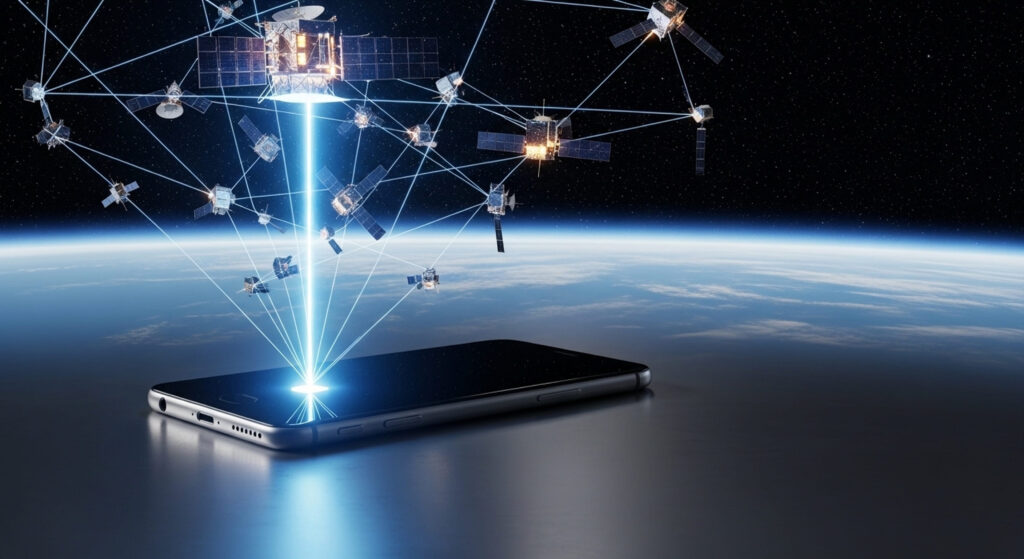
Direct-to-device (D2D) satellite connectivity has moved beyond the conceptual stage, but the industry risks undermining its commercial potential by allowing future performance targets to define consumer expectations today. That was the central message from Opensignal Principal Analyst for the Americas Fiona Armstrong-Mills; she described the emerging D2D market as being at an inflection point between standardization and real subscriber experience.
Approximately 45 mobile operators already have D2D services live or in trial, with many more evaluating partnerships, pursuing licenses or planning launches. That scale makes satellite-to-handset connectivity “an active test requirement,” rather than an issue that can be deferred until 6G or 2030, Armstrong-Mills said.
The immediate value proposition is clear. D2D can provide basic connectivity in rural and remote areas where terrestrial networks are unavailable or economically impractical. Even in developed markets, Opensignal users spend up to 1% of their time with no mobile signal.
But current satellite services remain constrained by limited capacity, line-of-sight requirements, moving satellites, handovers and variable connection quality. Armstrong-Mills recounted reports from colleagues who spent minutes “waving their phones in the air” to establish sufficient visibility to send a text.
That experience sits uneasily beside industry discussions of much higher future performance. Starlink has targeted D2D speeds of 150 Mbps by the end of 2027, while other providers are pursuing broader voice and data capabilities. Those ambitions are important for network planning, but Armstrong-Mills cautioned against applying the language of terrestrial LTE or 5G to services still primarily designed as a last-resort connection.
“Users are being primed by headlines, by launch announcements, by those 150 megabits per second numbers to expect a comparable service,” she said. “But that…shouldn’t be the true expectation. That’s not the true experience.”
The commercial stakes are significant. An Opensignal poll found that most respondents would use D2D if it were available, but only 47% were willing to pay more. Convincing consumers to pay a premium will therefore depend less on peak throughput than on dependable performance for the specific services being promised.
“We do need to get just a little bit closer to that reliability piece, that consistency of connection, before the monetization opportunity can come…I’m not going to pay for it if I don’t have a good experience even sending that text,” Armstrong-Mills said.
Opensignal’s proposed measurement framework begins with four principles: NTN constraints are physical realities; field conditions must define testing; terrestrial service remains the user’s reference point; and reliability is table stakes. Useful metrics may include connection time, message-completion rates, application success, availability and performance in rural or in-motion conditions.
“Users don’t reset their expectation just because the signal came from space,” Armstrong-Mills said. “The phone in their hand is the same. The apps are the same.”
To be clear, D2D is succeeding by many metrics, but the industry must define success accurately. Satellite connectivity can create substantial value by replacing no service with usable service. Establishing that value, and eventually monetizing it, will require measuring what customers actually experience rather than what the network may ultimately be capable of delivering.