
 eighthatsllc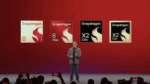
 Juan Pedro Tomás
Busways are designed to efficiently transmit large amounts of electrical power in a compact, modular, and scalable format—qualities that matter more as data centers grow in size and power density, especially with AI workloads. In sum – what to know: Power distribution – Busways deliver electricity through prefabricated busbars, replacing or complementing traditional cable-based systems in data centers. Operational flexibility …
Cerebras told investors that the firm is in early discussions regarding potential data center deployments in Israel, the UAE, Australia, Singapore, India, and Indonesia In sum – what to know: Global infrastructure push – Cerebras is expanding data center capacity across North America and Europe while exploring potential deployments in additional international markets. Supply chain advantage – The company said …
According to McKinsey, traditional compute, storage, and cloud workloads currently account for more than 70% of APAC data center demand, while AI training and inference workloads represent roughly 30% In sum – what to know: Regional growth engine – Asia-Pacific could account for 34% of global data center demand by 2030 as local AI adoption and enterprise digitization accelerate, according …
Reliance Intelligence, part of Indian conglomerate Reliance Industries, is building what it describes as India’s sovereign AI backbone in Jamnagar, Gujarat In sum – what to know: Sovereign AI infrastructure – Reliance Intelligence is building a sovereign AI backbone in Jamnagar, with the first 120 MW phase due online by the end of 2026. Affordable AI push – Mukesh Ambani …
 Christian de Looper
Both are 2nm with the same 5GHz Oryon CPU In sum – what we know: Qualcomm has split its flagship smartphone chip in two. The company has announced the Snapdragon 8 Elite Gen 6 and a higher-spec Snapdragon 8 Elite Extreme Gen 6, the first time it has launched two top-tier flagship chips simultaneously. As you would expect in 2026, the main talking …
The AgentX result is impressive, but it rides on one specific operating point In sum – what we know: According to Nvidia, the Vera Rubin NVL72 rack system delivers up to a 30× higher agentic-AI throughput per megawatt than the preceding GB300 NVL72 system in SemiAnalysis’ AgentX benchmark. The company also says the comparison corresponds to up to 45× lower cost per …
OpenAI is matching chips to workloads instead of picking one vendor In sum – what we know: OpenAI is slowly but surely moving away from Nvidia, and it’s doing so in public. Speaking with Jim Cramer on CNBC’s Mad Money, OpenAI CFO Sarah Friar laid out the company’s multi-vendor compute strategy in unusually plain terms. “Just as we have a strategy …
Bigger CoWoS packages may keep AI accelerators scarce anyway In sum – what we know: TSMC is reportedly preparing to roughly double capacity for its CoWoS advanced-packaging technology by the end of 2028. The estimate, according to analysts cited by Taiwan’s Economic Daily News, puts CoWoS capacity at about 130,000 wafers per month at the end of 2026, rising to about …
