

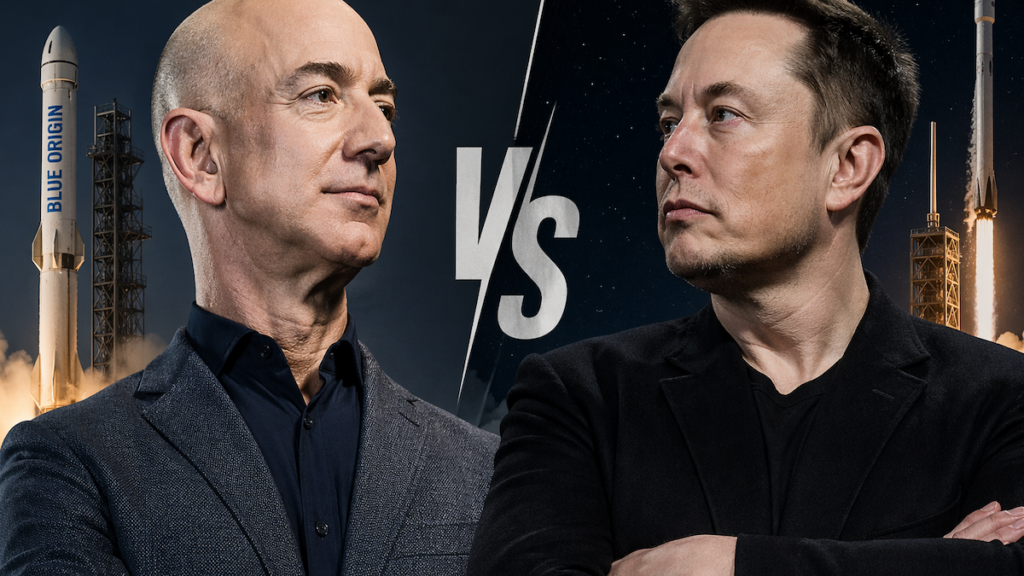
United Launch Alliance (ULA), the joint venture between Boeing and Lockheed Martin, suffered its first outright launch failure in its 20-year history yesterday (Sunday) after its Vulcan rocket somehow fell to pieces – “suffered an anomaly” and “separated” – 10 minutes into after liftoff from Cape Canaveral in Florida. Its entire payload – 40 satellites belonging to Amazon Leo – was lost. The timing could hardly be worse. Amazon Leo, formerly Project Kuiper, has had a bruising run-up to its commercial launch. The Vulcan failure is another setback for a business that is already struggling to get enough satellites into low-Earth orbit (LEO). It has had FCC approval for 3,236 of them since 2020; it has so far deployed around 398. Starlink has deployed 13,122 since 2019, and its parent, SpaceX, is targeting 60 next-gen V3 satellites and around 61Tbps of capacity per Starship launch – more than 20 times its payload capacity at present (a Falcon 9 carrying V2s), and about 1.5 times as many satellites and over 20 times the aggregate bandwidth per launch versus Amazon Leo’s current-gen satellites on a problematic Vulcan rocket.
Amazon has the production scale; it reckons it can manufacture 30 satellites a week (over 1,500 annually). But getting them into orbit is a headache. Its alternative launch providers have also been struggling: Blue Origin’s New Glenn rocked suffered a catastrophic on-pad failure in May after an oxygen-valve problem in one of its engines; ULA’s Vulcan has twice suffered solid rocket booster nozzle anomalies on earlier flights; Ariane 6 doesn’t offer the launch cadence to meet its deployment ambitions. Amazon has also bought launches from SpaceX, its principal competitor, using Falcon 9. This was the first of 38 Vulcan launches contracted by Amazon, expected to carry more than 1,500 Leo satellites into orbit. It had also invested in dedicated launch infrastructure at Cape Canaveral, including a new integration facility and mobile launch platform. T
he intention was to get Vulcan launches turning around in days or weeks, rather than months. Amazon said its second Vulcan mission was already being prepared and could follow within weeks of a successful first flight. Instead, it now faces another investigation and potentially months of disruption. It was hoping to begin initial commercial services in 2026. The loss of 40 satellites, on top of the problems with New Glenn and Vulcan, makes that timetable challenging. The firm has invested billions in building a rival to Starlink, has the manufacturing capability to produce satellites at scale, and has assembled a huge portfolio of launch contracts. But it doesn’t control the rockets needed to execute its plan. No such bother for SpaceX – which owns the launch engine, and has just caught its 171-foot upper stage on its return from orbit using a pair of giant mechanical ‘chopstick’ arms on its launch tower in Texas.

James Blackman
Executive Editor
RCR Wireless News
RCR Top Stories
All eyes on ISAC: Nokia is testing ISAC for US drone detection, while Elisa and Telefónica are putting public and private 5G to work in European defence projects – and Ericsson has a smart view of developments, besides.
Lesser losses: Rakuten Mobile narrowed its Q3 losses as revenue and subs grew, while roaming changes slowed additions and accelerated network investment supports coverage expansion and planned satellite services with AST SpaceMobile.
TIM synergies: Poste Italiane has confirmed €700m in annual synergies from TIM, detailing cost-saving initiatives, commercial plans, an industrial AI project and a data-center investment model.
SKT’s AI infra: SK Telecom is developing its AI infrastructure through SK Hyper and SK Horizon, with customer discussions, financing plans, data center expansion, and submarine cable development targeting 2029.
Agent patches: Rogue AI agents could expose enterprise networks to breaches, compliance failures, and uncontrolled changes as autonomy increases. Hexnode says businesses should manage agent rollouts like software patches.

AI-Powered Telecom Infrastructure
Supermicro, in collaboration with NVIDIA, delivers AI-powered infrastructure tailored for telcos, enhancing operational efficiency, network management, and customer experiences. Explore now
Beyond the Headlines
Post-Huang AI: Nvidia’s financing guarantees are under scrutiny following its leadership upheaval, raising questions about whether smaller AI cloud providers can secure funding for new GPUs. A slowdown could shift compute capacity.
Sovereign SKT AI: Nvidia, Rebellions and SK Telecom have signed an MOU for Korean sovereign AI inference. The R200 details remain undisclosed, and the Huang scandal overshadowed the signing.
VDF in business: Vodafone has upgraded guidance after delivering 5.8% organic service revenue growth, with its Africa unit and enterprise digital-services mix driving momentum, while Germany remains a drag and further job cuts loom.
TIM integration: Telecom Italia is advancing integration with Poste Italiane, renewing its proposal to Inwit and evaluating FWA and satellite to extend connectivity where fiber access is unavailable.
Freeport 5G is live: Verizon has completed a five-site private 5G deployment across Thames Freeport – 8 months after the deal was announced. The project spans ports, logistics, and manufacturing, and features a big pipe of industrial apps.
What We're Reading
Satellites down: A United Launch Alliance Vulcan rocket failed around 10 mins after launch from Florida, destroying all 40 Amazon Leo broadband satellites aboard. The failure, ULA’s first, threatens to delay Amazon’s satellite internet rollout.
EU ‘gigafactory’: Nokia, Nscale, Telia, and others are to build federated AI infra across the Nordic and Baltic region, combining computing, sovereign cloud, connectivity, and low-carbon energy. The want EU backing.
Indoor signals: Ookla finds a 17dB gap in indoor signal strength between the world’s strongest and weakest city markets, with North American and European cities generally trailing Asian counterparts, in a study covering more than 100 cities.
Open Gateway: Fastweb+Vodafone and Iliad have joined the GSMA’s Open Gateway project with TIM and WINDTRE to expand access to network capabilities that help businesses verify customer identities and secure digital services.
DT & DE-CIX: Deutsche Telekom and DE-CIX are to give smaller internet and content providers direct access to DT’s network via DE-CIX connections, adding two 400Gbps ports in Frankfurt. The paid service will be called DirectROUTES DT.
Latest RCRtv Interviews
Events
AI Infrastructure Forum, December 8th, Virtual
Join RCRTech’s AI Infrastructure Forum to explore how telcos, hyperscalers and data centres can compete or partner as AI shifts to inference, and who captures the value when every token counts. Register now
PTC’27, 17-20 January, 2027, Honolulu, Hawaiʻi
PTC’27 is the premier event for digital infrastructure, telecoms and ICT. Executives, investors and researchers meet to share knowledge, build relationships and drive new business. Register now
Industry Resources
RCRTech Trend
WiFi Driving Telco Growth
RCRTech Trend
Rise of Non-Terrestrial Networks (NTN)