

Stuff from today, as I melt in the heat. UK-based Vodafone is at the heart of the action again as the telco market consolidates – to paraphrase one analyst, on news that Emirati telco e& has agreed to sell its 16% stake in Vodafone to French telco tycoon Xavier Niel for $5.9bn. Analysts said the move is a vote of confidence in Vodafone’s position and prospects, and also as a harbinger of cost cutting in the name of sharper focus – which is the motivation behind strategies at e&, here, and Vodafone, more generally. Note, Niel has form, with cuts variously at other firms in his bursting investment portfolios, which includes Iliad, Salt, Eir, Monaco Telecom, Tele2, and Millicom.
Meanwhile, Kelly has an update on the Linux-based open-source CU/DU (OCUDU) project to plug one of open RAN’s gaps. Because while open RAN has opened interfaces in the network, the underlying software stack is largely closed. The OCUDU gang – with Qualcomm, Ericsson, Nokia, Samsung, AT&T, Verizon, everyone – aims to make the central and distributed units a shared software foundation to give telcos a common platform to build AI-native 5G and 6G. The question is whether open-source can finally deliver the flex and diversity that open RAN promised. Anyway, the OCUDU foundation has a framework. Arpit Joshipura at the Linux Foundation tells Kelly all about it.
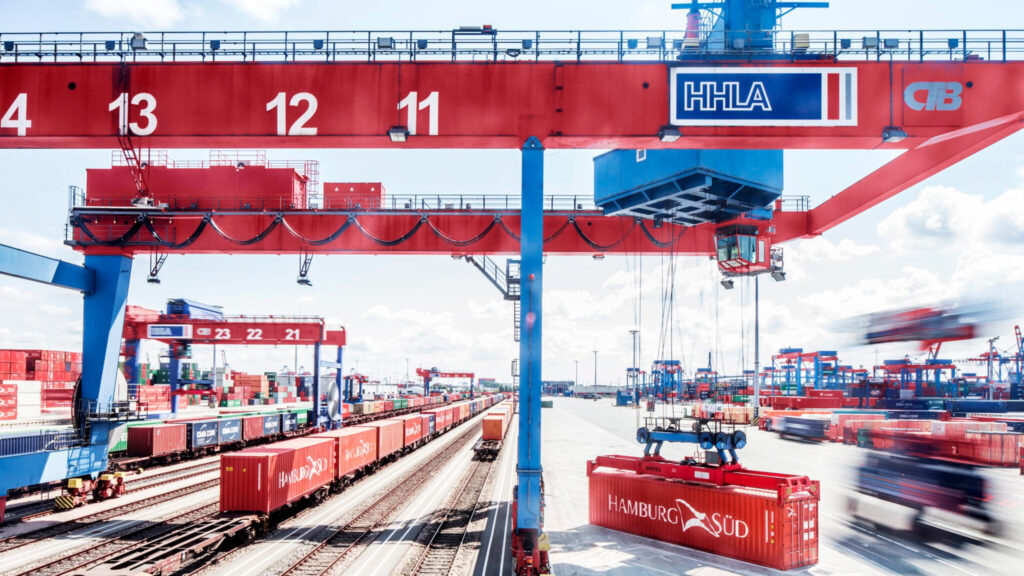
As well: a story that seems to repeat what was signed, deployed, and written five years ago: the port of Hamburg has a private 5G network from Deutsche Telekom and Ericsson. The Container Terminal Altenwerder (CTA) operated by Hamburger Hafen und Logistik AG (HHLA) wanted, initially, to cover a square kilometer of prime port real-estate to support worker comms, critical logistics, and future apps. Hamburg is a big one – Germany’s largest seaport and Europe’s third-largest container port – and the deal looks like another big winner for the private 5G community, which feels like it has had a kicking ever since Nokia pulled out.
But like we say, Hamburg has been all over private 5G for ages. I remember using brilliant pics of the port to illustrate reports five years ago (found again for this piece), and a quick search of the archive says it is no stranger to telco-based digital-change projects: trials with Deutsche Telekom and Nokia way back in 2019; slicing experiments with Deutsche Telekom the same year, from practically before 5G was even a thing; terminal operator Eurogate signing with Deutsche Telekom on an expanded deal in 2023 to cover Hamburg plus two other ports. There will be much more in the archive. In the end, maybe it just shows what a slow-burn this has been.

James Blackman
Executive Editor
RCR Wireless News
RCR Top Stories
Niel grabs VDF stake: French telco tycoon Xavier Niel is to be Vodafone’s largest shareholder after agreeing a deal to buy e&’s stake in the UK firm for $5.bn. It signals a new era of activist investment and cost discipline for EU telcos.
OCUDU and O-RAN: The OCUDU foundation is working on open RAN, and its first technical release is already out. The project has backing from Qualcomm, Ericsson, Nokia, Samsung, AT&T, Verizon, others.
Nokia defense tech: NestAI and Nokia have introduced AI-powered 5G and sensing capabilities meant to keep military forces connected, coordinated, and aware even when enemies jam or destroy networks.
AI chips compared: Google, Amazon, Microsoft, Meta, and OpenAI are all designing custom AI chips now. The architectures are quietly converging — and yet none of them have pried Nvidia loose from training.
5G for mission-X: 5G is good for critical industries, says Mototola Solutions, but they still depend on resilient LMR networks, with broadband technologies serving as complementary rather than replacement infrastructure.

AI-Powered Telecom Infrastructure
Supermicro, in collaboration with NVIDIA, delivers AI-powered infrastructure tailored for telcos, enhancing operational efficiency, network management, and customer experiences. Explore now
Telco Diary
Thu | Plumbing is product: AI is driving investment across the telco stack – from data centers, fiber, and DCI to access networks, IoT, and edge computing – as operators, hyperscalers, and enterprises race to build resilient AI connectivity.
Wed | Mobility for AI: Ericsson’s mobility trials with AT&T and MediaTek suggest better 5G handovers could be a key enabler for critical IoT, private 5G, and physical AI apps that depend on uninterrupted low-latency connectivity.
Tue | AI hub and spoke: About the AI stack: Lumen has bought Alkira for AI network connectivity, Nscale has secured $900m for data center, Dell’Oro claims record infra growth, and Druid has bought Node-H to simplify private 5G.
Mon | Q-Day is nigh: The Quantum Safe Networks Forum highlights telecom’s urgent race toward post-quantum security, with telcos exploring quantum-safe networks, migration strategies and standards to prepare for Q-Day threats.
Thu/Fri | AI imperative: Sean follows up his DTW narrative: the same idea as before, and as with his recent Cisco and Qualcomm reports: how to safely delegate to AI inside systems that were not designed for probabilistic behavior
What We're Reading
5G port project: Deutsche Telekom and Ericsson have installed private 5G at Europe’s third-largest container port, the Port of Hamburg for critical logistics, real-time apps, and as a digital test environment for innovative port solutions.
SGP.32 eSIM: Telefónica is launching an eSIM solution from Thales based on the SGP.32 standard. It allows enterprises to use a single card with profiles from multiple operators. Telefónica said it is strengthening as an IoT ‘orchestrator’.
SME AI take-up: Accenture and Google Cloud are targeting mid-market AI with scalable agentic solutions, combining pre-built industry agents, Gemini Enterprise and data tools to help companies move from AI pilots into production faster.
AI-ready? Nope: No 5G networks anywhere supports sub-10ms for AR and multimodal AI vision, says Ookla – even if networks are doing okay for AI text and voice latency, with most achieving under 50ms and 40ms respectively.
Enterprise AI stack: Vultr, Suse, and Nvidia have a ‘full-stack’ enterprise AI platform combining AI software, accelerated computing, and loud infrastructure. It aims to simplify deployment, strengthen governance and help enterprises.
Events
CCA Annual Convention, September 14-16th, New Orleans, Louisiana
Join industry stakeholders and innovative leaders in the communications service provider community this fall at CCA’s 2026 Annual Convention. Register now
RCR Roundtables AI Infrastructure, October 21st, Dallas, Texas
Join 50 senior data center, energy and AI leaders at the Ritz-Carlton Dallas on October 21 for invitation-only roundtables on powering and scaling AI. Request your invitation
