

Table of Contents
Crusoe’s Pritesh Indore says pre-construction site selection for data centers and AI factories focuses on 4 key pillars
In sum, what to know:
- 4 Pillars of site selection: Power, land and logistics, state policy and regulations, and labor force are key considerations in choosing sites for MW and GW-scale projects, on a case-by-case basis.
- Brownfield vs greenfield: Brownfield can eliminate unforeseen site-enablement costs (which can range from $30-80 million), but can also be a one-phase asset without room to grow.
- Secondary markets on the rise: Northern Virginia still dominates, but West Texas is catching up, and other regions like Michigan, Wisconsin, Ohio, and New Mexico are fast becoming AI hubs.
Pritesh Indore is the Senior Construction Cost Estimator and pre-construction strategist at Crusoe Energy Systems, leading end-to-end development, from feasibility studies to strategy planning, to the full lifecycle construction cost estimation. His work includes projects exceeding 2 GW of planned capacity, including Stargate’s Abilene, TX campus and a 900 MW campus expansion for Microsoft that is expected to grow to 2.1 GW.
Power as a strategic asset
When it comes to identifying, evaluating, and securing suitable land for data centers, there is a lot to consider, such as power availability, land suitability, fiber access, zoning, and environmental studies. With AI factories and data centers for AI, the model has flipped, with operators bringing data centers to the power rather than building first and then bringing power. “Power is no longer a utility, but a strategic asset, and the developers who treat it that way are winning that right now,” says Pritesh Indore, senior pre-construction estimator for Crusoe Energy Systems. “The ones who treat power like a procurement line item are stuck in international connection queues of up to 8 years right now.”
That is true in saturated markets, like that of Northern Virginia, once the “crowned jewel” for data center development. “With more than 300 facilities, the PJM wait time has grown to more than 8 years, with the queue up to about 250 GW in that region, alone,” notes Indore. He explains that Stargate-scale projects and the need for hundreds-of-GWs of capacity means “deliverable power” replaces fiber connectivity as the primary gatekeeper and screening criterion for new data center builds. “With almost 1.2 GW capacity in operation right now, new site selection methodologies are based on power availability, as opposed to fiber proximity in planning today’s data centers,” he adds.
Beyond the power needed for the IT equipment itself—servers, storage devices, and networking gear – cooling is the largest non–IT energy expense, often consuming 30% to 50% of the total energy. “Where you traditionally had 30-50 MW data centers, which required a certain amount of cooling, you now have GW-scale factories, and a lot of chillers and cooling facilities, with the chip-to-air chillers becoming one of the biggest challenges,” says Indore, explaining that anything related to the cooling of the data center has a tight timeline. “Because cooling is not an asset, it’s an expense, so getting it done is a challenge, and will continue to be for the foreseeable future as well.”
Another challenge is the supply chain issues around transformers, which can lead to schedule risks. “We always have a plan for if things go south,” said Indore, emphasizing the need for preparedness now that lead times for procuring specialized cooling, transformers and other infrastructure are growing. “For example, it’s hard to know when [liquid cooling] will wipe out the air-cooled chillers, so we always have a plan.”
Greenfield vs. Brownfield
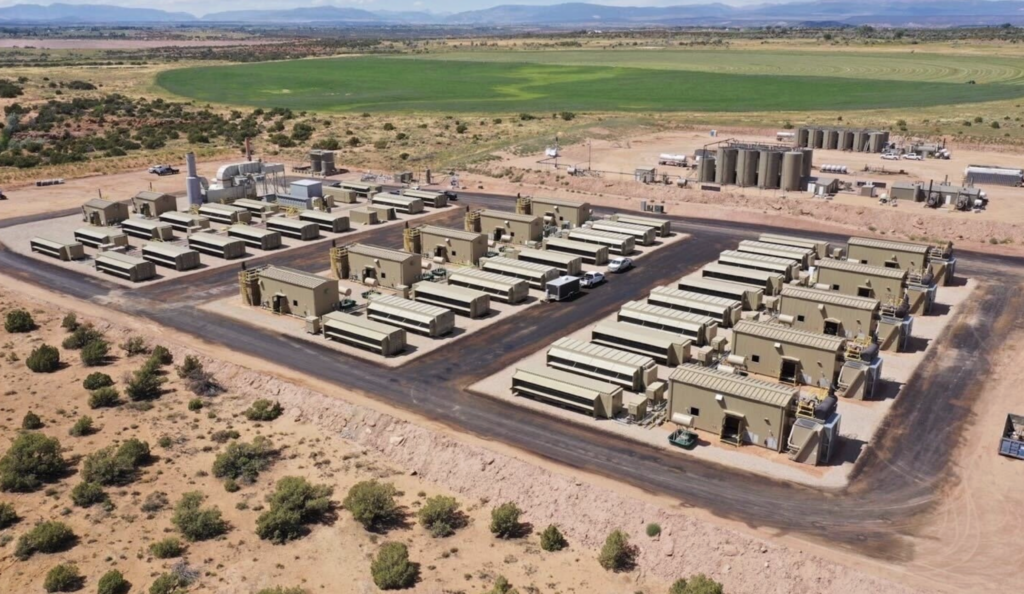
The desperate search for power has made brownfield sites increasingly attractive to data center developers, says Indore, explaining that in design decisions, greenfield sites represent a “blank canvas,” in every design decision, which initially sounds great, “until you realize they take time and money to prepare, whereas brownfield gives you a headstart and you are not also inheriting someone else’s decisions, problems and liabilities.” He says it’s often better to get the brownfield and make it “deal-specific.”
Indore also sees the mistake of companies jumping on cheap land in rural areas, and trying to perform around the land cost, “but what they miss in the site enablement cost, which can be enormous,” he says, noting that costs for transmission line extensions, substation construction and updates, water and sewer infrastructure, road improvements required for county permitting, scarcity of fiber – all if it adds up. “I’ve seen site enablement add as much as $30 million – $80 million to a project budget that wasn’t modeled into early greenfield planning. That’s a pre-construction failure.”
Conversely, Indore says, a brownfield project has a very real upside. “Existing power infrastructure is there, existing entitlements in some cases, and you can actually do the retrofitting and avoid the problems of power availability, entitlements, laws or irregularities; rather, you take someone else’s envelope and fit in your AI compute inside.” He says those are some of the reasons brownfield projects are increasingly attractive. “With them, you can deploy capacity sooner, and avoid building from the ground up. This is why we see a balance between large-scale AI factories, as well as utilization of brownfield projects.”
Because there’s a lot of infrastructure in the U.S. that can be retrofitted, Crusoe seriously evaluates sites that offer a credible path to the megawatts that are needed. That said, Indore does explain that there are instances in which you want to make sure you don’t lock yourself into a “one-phase asset” with no room to grow. “For example, a brownfield in a dense industrial park may offer no room to grow…but a greenfield with 500 acres and a 20-year development roadmap offers long-term optionality. That’s a real value that doesn’t always show up in a year-one budget.”
Because there are pros and cons to brownfield and greenfield, they are considered on a case-by-case basis. “The long-term GW-scale projects might want the larger lots and future roadmap of development for that region. But if you want to deploy your capacity sooner rather than later, then you can go greenfield where power is available and all you have to plan is your rack density and get the compute operational.”
Indore also emphasized the need for contingency budgets and the ability to recalibrate. “The chip companies improve day by day, so when we plan with construction, we plan for a particular deployment and over the period of the construction, but they are evolving the new design for the chip.” For that reason, it’s important to ensure that what is built is sufficient for the integration of updated technology. “We plan for that change. We build our data centers so they have a adaptability for future changes…we carry that contingency up front, as we build large-scale data center factories.”
The rise of secondary markets
As Northern Virginia’s construction slows a bit, an incentive war is breaking out in not only Texas, but also in states like Mississippi, Wisconsin, Michigan, and New Mexico – all of which are positioning themselves as AI sovereignty hubs, with copious rural land they consider a strategic asset for building data centers.
Through tax breaks, workforce pipelines, fast-track permitting, grid investments for substations and infrastructure for large loads, these states are courting data center developers.
For now, Northern Virginia remains the largest operational market in terms of total existing MW capacity, but Texas is racing to dethrone Virginia, with massive, GW-scale AI projects across the Lone Star State. As of publishing, there were approximately 140 data centers under construction in Texas, and JLL projects Texas will officially overtake Virginia as the largest overall data center market in the world by 2030.
Case in point, in just two years, Abilene, alone, has welcomes massive, multi-GW complexes, like Stargate’s Lancium Clean Campus and a 900 MW campus expansion for Microsoft, which Crusoe projected would reach 2.1 GW of total capacity.
According to Indore, other regions of interest right now include “Michigan, with 1.4 GW planned, Wisconsin, which is already up to 1 GW, and Ohio with something like 2 GW of capacity planned for this year.”
As Crusoe looks to plan and build AI factories in these areas, Indore says there are “4 pillars” of selection he takes into consideration when looking at a site:
- Power
- State and local policies
- Land and logistics
- Labor
For example, labor is a key factor, and with a huge shortage of certain critical skills, like electricians, there are many things to consider, says Indore. “I look at the availability of skilled trades people, union versus open shop labor, prevailing wage requirements, proximity to workforce pipelines for construction and operations. Like Jensen Huang said, the next generation of millionaires will be the electricians and plumbers.”
To attract skilled labor, Indore said incentives for high pay, travel allowances, and more are continuing to increase.
Looking ahead
When looking to the next year, Indore says he is excited that SMRs, BYOP, data centers in space, and other sources of power will evolve. “All these data centers traditionally ran on the interconnection of the grid and substations, so as we head to a future of more computing power than we can imagine, how we fulfill that demand and provide that much power to the data center is very exciting…Instead of burdening the existing grid, the strategy to build their own is going to make for an exciting year. The next time we speak there will be a lot more innovation and a lot more options.”
As the industry evolves, Indore’s site selection strategy for AI data center and GW-scale factory projects will adapt to ongoing changes in power and utility markets, and the preconstruction costs that drive strategic, tactical and financial dimensions of AI infrastructure.
