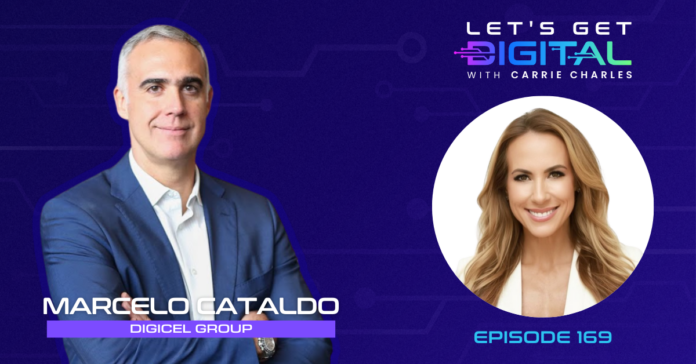
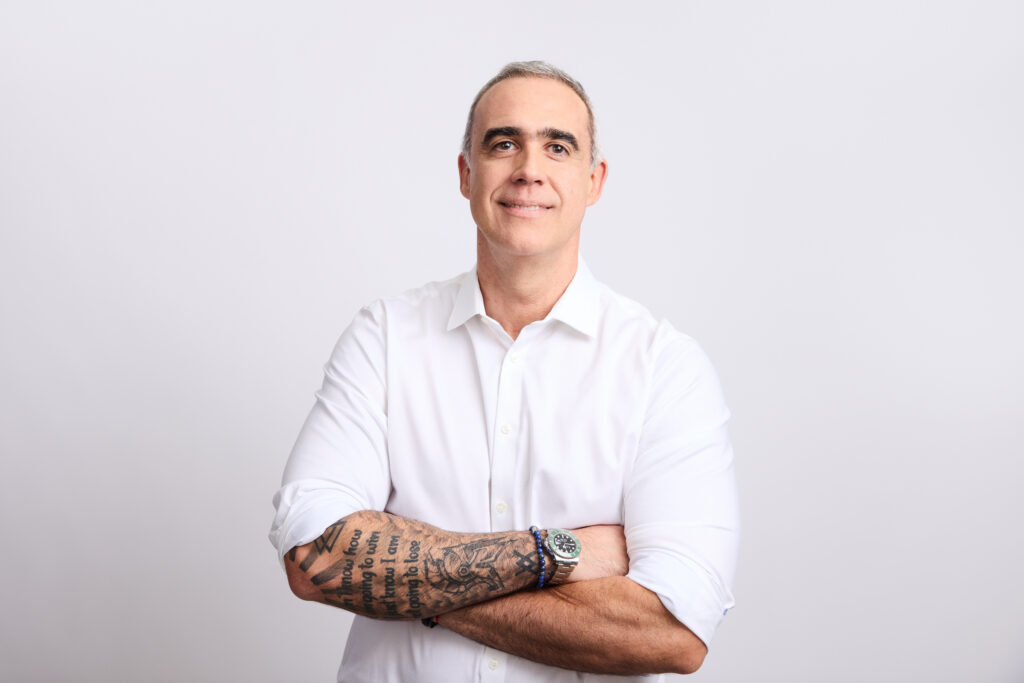
00:00 Ready to explore the cutting edge of digital infrastructure? I'm Carrie 00:04 Charles, your host of Let's Get Digital. Join me as we dive into the ideas, 00:09 technologies, and leaders transforming the way we connect from wireless telecom 00:14 to fiber networks, data centers, and beyond. Sponsored by Broadstaff in 00:19 partnership with RCR Wireless News. Now, let's dive in and let's get digital. 00:26 >> Welcome back to Let's Get Digital. I'm Carrie Charles, your host, and I'm so 00:30 glad you're here. We got a great episode for you today. Today's episode is one of 00:35 those conversations that reminds you that telecom is not just about 00:39 technology. It's about people, safety, and resilience. My guest today is 00:45 Marcelo Catalo. He is the CEO of Digisel, the largest mobile provider in 00:50 the Caribbean. Marcelo has led an incredible turnaround which we're going 00:54 to hear about in a few minutes bringing stability, focus, and innovation across 00:58 Digell's footprint of 25 countries in the Caribbean and Latin America. 01:04 Marcelo, I'm so glad you're here. >> Hi, Gary. Thank you for having me on 01:08 your program. >> Yes. Yes. So, let's start with you. I 01:12 want to hear all about your story, a little bit about your early career, 01:16 maybe leading up to becoming the CEO of Digicel. may some moments that really 01:20 shaped you. >> Okay, so I come from a small country, 01:24 Paraguay in the heart of South America. I grew up there, studied there, did my 01:30 technology. I come from the which my my current business friends will say from 01:35 the dark side because I come from the technology side depending on the way 01:39 that you look at it. So I developed a long career at the beginning on 01:43 technology, you know, getting into servers, databases, hardware, etc. 01:48 But then I saw an opportunity of contributing to the business. This is 01:52 where I moved to the commercial area. My biggest tenure on telecom is ended in 02:00 2024 to join Digel in Mill. With Milcom, I worked in my country Paraguay. Then I 02:05 work at the headquarters in Miami and finally being the CEO of the biggest 02:11 operation for them in Colombia for seven years before taking this nice challenge 02:16 here in the Caribbean region. It's been a long ride. The gray hair cannot hide 02:21 my years of experience but fantastic focus in Latin America. I work in Europe 02:27 though because at one point in time in my career I work in finance. Yes. So a 02:32 little bit of Europe, but my main focus is our region here, Latin America and 02:36 the Caribbean region. >> So tell me about Digisel. 02:39 >> Well, Digel, I joined Digel May 2024. The company has just finished a 02:46 restructuring. So it was kind of a reborn. Digel will make this year, you 02:51 mentioned 25 countries. We will make this year 25 years. We started here in 02:56 Jamaica. I'm here at our headquarters in Jamaica. And we started 25 years ago. 03:00 nice history, but the company faces some financial challenges that ended up with 03:06 a change of owner and a complete restructure at the end of 2023. When I 03:11 joined, the main focus was, as you mentioned, to turn around the company, 03:15 put the company back on track, processes, procedures, operating model, 03:20 everything that we can, you know, talk about it during the interview and 03:24 obviously putting it in the right track on the financial area. Even though the 03:28 restructured give us a new capital structure, it was very very tight for us 03:34 and we need to invest. So that was our starting point in May 2024. 03:39 >> So May 2024 to where we are today in 2026. I mean that's a short amount of 03:45 time. So I am dying to know how you did it. How did you execute the turnaround? 03:51 Well, it was a very intense period because if you think of we faced the 03:57 refinancing that we did very successful July last year. So a year into the job 04:02 we were already refinancing $2.7 billion. We faced two hurricanes one in 04:08 2025 burial and Melissa in 2026 and here we are producing a strong results and 04:15 strong numbers and growing in our region. How we did that? There are I 04:19 would say three elements of it right. The first one is to define a clear 04:24 vision of what you want to do. We are a teleoperator. 04:28 Typically of a teleoperator is a process of trying to get revenue from other 04:34 businesses adjacencies you know content mobile financial services and this 04:38 company unsuccessfully tried that. So our main focus was to focus on our 04:42 portfolio mobile fix to the home ICT services to our corporate and government 04:48 partners. So that's number one. Second, the operational model to deliver on that 04:53 strategy. The operational model. This was a very heavy headquarterled company. 04:58 You cannot drive 25 companies from the headquarters. So we changed the 05:02 operational model to give more autonomy, more authority, more capabilities to the 05:08 markets. And we as a headquarter we are the guidance. We provide you know the 05:13 processes the procedures and obviously we manage the portfolio of investment of 05:18 those countries. And the third which is the most important is the people and the 05:23 culture that you need to deliver the operational model to be able to deliver 05:26 on your vision. So these were the three things we did really really fast 05:30 changing the organization changing the team changing the people to be able to 05:35 be where we are today. Well, we're going to talk about where you are today and 05:38 it's exciting and I just want you to know, Marcelo, I when I spoke to you on 05:42 our earlier call, I mean, you're just such an inspiration and I got off that 05:45 call feeling, I don't know, not just inspired, but just excited about the 05:49 future. So, stay tuned. I have a question though about the there are 05:54 parts of the Caribbean that are still years behind and you said some of the 05:58 customers are still on 2G. So where do you see the biggest opportunity to 06:03 really leap forward both commercially and also for the biggest social impact? 06:08 >> Yeah. Well, in my experience of working in several countries in Latin America, 06:13 you see Latin America usually from the telecom perspective, right? usually 06:18 three four years behind the US behind Europe in the launch of 4G in the launch 06:24 of 5G in the offers in the ecosystem that we provide as telco to our 06:30 communities and customers. Well, the Caribbean is again another two or three 06:33 years behind Latin America because as I mentioned to you, we still have users 06:38 with 2G uh 3G only voice. So to your question, the main opportunity on the 06:45 mobile ecosystem is to provide the data capability to evolve them into this 06:51 digital journey for them to use their bank over the phone for them to 06:57 communicate, work and study over the phone or a connection at home. This is 07:02 still in some of our countries at very early stages and this is the opportunity 07:06 for us from the business perspective and from the connectivity at home a 07:11 penetration of connectivity at home is less than 50% compared to 90 95% that 07:17 you can have in Europe in the US and even in some countries in Latin America 07:20 so everything that you see from the business perspective is at early stages 07:25 and that is connected to our outstanding but also very important and 07:31 participation into our communities, right? Helping them to move up in this 07:38 value chain of the digital ecosystem gives them more capabilities for small 07:43 businesses to trade not only at their neighborhoods but to trade across all 07:47 the region to have more visibility of their brands to protect them with cyber 07:52 security everything. We are doing a lot of consulting to them for them to 07:57 understand what does it mean cyber security? I have all these 100 options 08:01 but what is the right one for me? >> So it's a lot of work h very close to 08:06 our customers to help them in this journey. 08:09 >> So Digisel is headquartered in Jamaica as you said. Let's talk about the 08:14 devastating hurricane Melissa October 2025. What did this experience teach you 08:21 about leadership and also about what customers truly need from a telecom 08:26 provider? We need to be mindful that we are in one of the most climate 08:31 vulnerable regions in the world. Right? So for me the the one word response to 08:36 your question is resilience. Right? Resilience from the ground up. Right? 08:41 Hurricane ready towers, backup power, not only one but two. We're working on 08:46 solar smart site security and then the 08:51 recovery process because a hurricane will come and some devastation will be 08:55 there. So how fast can you recover? My experience in digel was very interesting 09:00 because I joined in May and then in July we got burial. So I was not even sitting 09:05 in my chair and I already got a hurricane. But I was amazed how prepared 09:10 digel is for these natural disasters. Right. Usually around April, May we 09:16 start retraining our team, communicating extensively in the TVs, in the office, 09:22 in emails, in conference calls to h remember how to react in a hurricane. 09:28 What are the things that we need? Obviously, preparation is the name of 09:32 the game. H fuel because obviously when electricity goes down, you need to use 09:38 alternative energy, solar. We are implementing a lot of solar, but mainly 09:42 is fuel. So where do you have the fuel? How much fuel do you have already in the 09:46 countries based on the predictions of the hurricane we're master on weather 09:50 forecasting and then spare parts and then the teams the teams ready once you 09:55 have the all clear from the government of that specific country or island you 09:59 go and recover. So Melissa is a clear example of that. After three four days, 10:06 right after the hurricane, we already have assessed 100% of our network. 10:11 >> Wow. And and in two weeks, we recovered 50% and in eight weeks, we were at 99% 10:17 of recovery with the biggest hurricane that the Atlantic region faced in the 10:22 last 100 years that went through Jamaica. We're not 100% yet, but we are 10:27 that in that process of recovery. And the additional element which is also 10:31 very important is to help the communities to recover. The third day 10:36 after the hurricane, we were in the streets. We were to Black River, to San 10:39 Elizabeth, the areas that were more impacted by the hurricane. We already 10:44 delivered 15,000 care packages, food, hygienic, essential needs. We have, you 10:50 come here to the office usually Wednesday and Thursday we're doing now. 10:54 You see a couple of vans full of care packages. We're going to this area to 10:59 this area. All volunteers, all employees from different areas just going showing 11:03 up because it's not only about recovering what is our service, but it's 11:08 also helping the communities to catch up after this devastating event. 11:13 >> So, you operate across 25 different countries. You've navigated hurricanes, 11:18 government instability, economic pressure. How do you balance that 11:23 resilience that you talk about and rebuilding which you've had to do since 11:28 2024 with growth and transformation? >> Yeah, that's a great one. Gary is all 11:34 about managing your OPEX and capex with very structured frameworks. Obviously, 11:40 priorities based on the last hurricane and based off what we have discussed 11:44 with insurance etc. We have these three four week spots. So there is where we 11:49 need to emphasize our capex and also on the business side right remember telecom 11:54 is an industry that is 50 years old we made 25 right in Latin America the 12:00 companies are making 30 32 years old or it's 50 years old in 50 years this 12:06 industry went from zero penetration to 150% penetration in our markets because 12:11 of prepaid it's very typical to have 120 130% penetration because people has dual 12:17 seams to just look at the offers every day, right? So that extensive growth 12:23 demanded from our companies a lot of capex to invest. But now is a saturated 12:28 industry like any other industry that we can think of the finance industry, FMCG 12:33 industry. So now is all about selecting the projects, selecting the investments 12:40 for us to get the return to our shareholders. So in that balance the 12:44 equation that is a little bit different that we have here is what you mentioned 12:47 K is to have also the resilient part right we have some towers down for this 12:53 hurricane we have like 30 okay how can we build it better to hold a category 5 12:58 hurricane so you take the opportunity of doing that we're investing in solar 13:02 because traditionally you have the grid then the grid goes out then you have a 13:09 generators with fuel then you have the batteries and and you're off. We add a 13:14 third one which is solar. We have a lot of places the critical ones and we are 13:18 building and rolling out here in Jamaica, Barbados, a lot of solar to 13:23 have even a more resilient network from the capacity of energy perspective. 13:29 Right? So to your question is balancing the two but being mindful that every 13:34 hurricane is a learning for us to be even more resilient every day. you know, 13:39 also around across those 25 countries, there's 25 different cultures and 13:45 markets and it's so diverse. How are you finding and developing local talent? I 13:50 mean, how is that working out for you? >> That is really amazing. And uh I have to 13:56 confess to join DJL, I read two or three books about the Caribbean history to 14:02 understand the history of the region because I faced that myself, right? I am 14:07 from Paraguay and uh when I was working in Europe or any other place they say, 14:11 "Oh, you are from Hugo." No, no, no. It's Paraguay. So people tend to think 14:16 that all the Latin America countries are the same and we tend to think that the 14:21 Caribbean region is all the same and it's not. There is difference on the 14:25 accent even so languages. Here in our region, our countries, they speak Dutch, 14:30 French, English, and Spanish. plus the local dialects that each of the islands 14:35 have. You have Papamento in Kurasau which is is kind of a broken Spanish. 14:41 You have a PUA here in Jamaica because these were the languages that in the 14:47 time of slavery the local population found the way to communicate without the 14:52 other people understanding what they were talking about. Right? So it is 14:56 amazing the cultural differences but again the cultural ecosystem that we 15:01 have it is amazing and we are betting on our talent. This is about also my vision 15:06 of building a future capable digital is not only to face a hurricane, a natural 15:12 disaster or to face a challenging financial situation at one point in time 15:18 but it's also to give the opportunity to our local talents that are now being 15:23 promoted into different areas. We have CEOs that I have promoted first time CEO 15:28 in ABC Aruba is Julius coming from the technical area 23 years in the company 15:35 in the southwest indies and Lucia Granadins and Vincent we have Joel also 15:41 being promoted from being a CFO of the region a Trinidadian. So the idea is to 15:46 give opportunity to the local talent. Our local talent have the capability, 15:50 the willness and the eagerness to conquer the market but in a structured 15:55 way. So we build everything that you can imagine in culture and talent. You know 16:00 bands of salaries, talent planning, talent mapping, mapping our top 100, our 16:05 top 200 for us to give them clarity. Okay, if you're in this position, you 16:09 can go here, here, and here. And obviously there is also a nice challenge 16:14 to move around the island. So, it's all about betting on our talent, training 16:18 them to be able to give them the opportunity of growing within the 16:22 company. >> Now, is all are all of those structures 16:25 the same among the 25 different markets or are they different like the career 16:30 pathing and everything you just mentioned? Is it built specifically for 16:33 that market? >> It is very different because I'll give 16:37 you the two extreme examples, right? We have in Haiti over 1,000 employees. We 16:43 serve a population of 11 12 million inhabitants but we also operate in 16:49 Monzerat where we have seven employees and the population is 4,000 people. So 16:55 one key element for us in this operational framework that I explained 16:59 to you is what are the things that we can capture more efficiency and synergy 17:05 by doing it at the group on an operational basis and what are the 17:09 things that we can rely on the market. Certainly the customerf facing selling 17:14 the service in the premises of our customers. This is 100% in the market 17:19 but the big countries for example they will have their own finance team. 17:23 Monzerat does not have a finance team. We provide them the support. So it's a 17:27 lot of balance depending on the size and also depending on the ecosystem of the 17:32 economy. Let me give you again two extreme situations. Bermuda. The GDP per 17:37 capita in Bermuda is $120,000 a year. Haiti is $2,000 a year. So you 17:44 need to understand that to see what is the potential of people that you have to 17:49 provide certain functions to the countries and then provide the 17:52 synagogers at the group. >> Yes. So let's talk a little bit more 17:55 about Haiti. You know, in a market like that where power and infrastructure can 18:00 be extremely unstable. What does it teach you about the real responsibility 18:05 a telecom operator has to its communities? 18:08 >> Well, every day our team there show up to work, which is already a challenge. 18:13 It really reinforces our responsibility, right? In Haiti, we have around 70% 18:20 market share. We provide connectivity to the main companies, embassies, 18:25 government entities. Plus, we serve millions of Haitians in mobile. So it is 18:33 uh very important for us to understand that every time that we are there 18:38 selling, serving, receiving a customer in our stores, selling top up, whatever 18:43 you can think of, we are fulfilling a mission, right? In a country that does 18:48 not have a electricity at this point in time, 100% of our network runs on fuel. 18:53 You cannot imagine the logistic work that our team has to do to be able to 18:59 distribute fuel for our network to be up. Our team there, they are masters in 19:05 electric engineer. They talk about megawws and and gigawatts and kilowatts 19:10 and the size of the tank to fulfill the fuel less time to drive to sides. It is 19:16 amazing how our team operates. We are really proud. number one priority for us 19:21 there is the security of our team, security of our people and obviously the 19:26 resilience. We are deploying a lot of solar because of the situation of the 19:30 energy in Haiti and again really really proud of the work. We also have our 19:36 foundation there so we also help the community especially on education and 19:40 work very close to them. Everybody relies on our network to work to study. 19:47 people have moved you know because of the situation of Haiti 1.5 million 19:51 people have moved across the country that defied us in moving our network if 19:57 I can say to be able to adapt to the new regions or to the capacity constraints 20:02 that we suddenly have because in our neighborhood there were very few people 20:06 and suddenly there's a lot of people so it's a lot of elements that you have to 20:10 think every day there and really proud of the digel team delivering this every 20:14 day >> how are you using AI at digital. 20:17 >> Well, we started discussing AI. That's a great question, Gary, because it's a new 20:22 thing. We are a technology company. AI is a new thing in technology. Usually in 20:28 these elements, you tend to fall into a trap which is to do AI for everything, 20:33 right? Let's use and I'm not saying that this is not a good tool, right? Let's 20:37 put the copilot license in all the emails for everybody to use copilot. And 20:42 at the end you end up spending a money does not that have a return for the 20:46 company. So the way we approach our tagline our strategy is everything that 20:51 has an improvement for for us and an improvement could be less cost more 20:57 revenue or also some efficiencies in other matters. Some examples we had our 21:03 AI agent is called Ruby. It was chat, right? The typical bot that deflects 21:08 some question and then you end up with a person chatting. Now Ruby is powered by 21:13 AI and is deflecting 60 even 70% of the calls just by pushing that. We are now 21:19 enhancing Ruby to have voice. So we tried a few weeks back and is also 21:25 learning PWA very very quickly. So on the customer service there is a big 21:29 opportunity. Then there are a lot of opportunities. Another example, sales 21:34 teams in the B2B ecosystem, right? I have a portfolio of 100 customers. 21:41 Sometimes it's very difficult as a salesperson to follow up. When did I 21:45 last call Car's company to offer something or when did I follow up with 21:49 Car's company after presenting the offer? There are some AI tools connected 21:54 to our sales ecosystem that is prompting, hey, don't forget to call 21:58 this person, don't forget to do this. If they rejected this offer, maybe this is 22:01 the way to do the offer. So in all the areas that you see opportunities 22:05 obviously on network network maintenance, productivity of network 22:09 maintenance, analysis of traffic. So we are having now I would say 50 60 cases 22:15 of AI understanding and looking at it but being very conscious of the cost and 22:21 the effort to implement to get something for us for us or for our customers. So 22:26 looking ahead, how do you think climate change will reshape telecom 22:30 infrastructure on a global level and what should operators be doing now to 22:35 prepare? >> Well, I think as we discuss on the 22:38 experience that we face here, h resilience is number one. sometimes 22:42 means a little bit more of investment but then after a hurricane if I recover 22:48 let's say whatever two days before my competitor I have even a business 22:54 opportunity obviously in a very sensitive and difficult situation but 22:59 the people they want to communicate right one of the first things that we do 23:02 is after a hurricane we reach to all our employees and we make sure that we all 23:08 everybody's accounted for because of the damage and the devast station that we 23:12 have in that area took us a few days for us to reach out to them. We have to 23:16 physically go there. Maybe they were not at their houses because the house is 23:19 completely gone. So they went to their parents, their friends. So there is 23:24 where you see how relevant telecommunications is for our lives, 23:29 right? We talk about the digital journey and using your bank, just sending a 23:34 simple text or saying, "Hey, I'm fine." makes a lot of a difference, right? So 23:38 for me this commitment to resilience and understanding the alternatives that you 23:43 may have in your markets to make your network more resilient is a key element 23:48 that will make that will make a difference obviously to seek a business 23:52 opportunity. Some businesses are now engaging with us to do business because 23:56 they saw that our network was more resilient in their areas in the region 24:01 but also to fulfill this social responsibility that we have as tele 24:05 operators. So how I mean you're managing so many different moving parts but I'm 24:11 questioning how do you build resilient teams? How do you build resilient 24:16 leaders? Let's look at it from the people aspect right and you as a leader 24:21 as an exceptional leader. How have you done that? 24:24 >> I would say the first thing for our employees and for the leaders is clear 24:30 and open communication. Right? In this new DJ cell, we are doing that across 24:37 everything. For example, we're now having we're not public, right? But 24:40 we're having quarterly calls with our investors. So, every quarter I sit with 24:45 my CFO and we talk about the quarter results and we show them the numbers. I 24:49 frequently visit them to talk about what is going on at Digis Cell, what are we 24:54 doing. And I was last week in New York facing a very different weather than 24:58 what we have here in Jamaica to talk to them to talk to the banks. So in the 25:03 same way to your employees uh team this is the way we're going to focus vision 25:07 and strategy operational model and this is the culture this is what we're going 25:11 to bring to you guys talent planning talent mapping training etc etc. This is 25:16 what we expect from you. So being very clear on the communication and being 25:21 consistent in the communication which is something that digel also lacked a 25:26 little bit on the past trying to do different businesses etc. That gives a 25:30 very solid foundation for our leaders because then our leaders their teams in 25:36 their groups in their interactions they can just build on that communication. 25:40 What are the business that we're doing? We're doing mobile, we're doing fix to 25:43 the home, and we're doing B2B services, ICT and connectivity. Very, very simple. 25:48 So, you start narrowing the discussions. And then you start being clear on the 25:54 objectives. Okay, this is the value of the company today. This is the value 25:57 that we need to produce. This is the way we're going to do it. And also with 26:02 accountability. It's not us from the group dictating everything. We don't I 26:06 can't know more than Stephen in Jamaica. I can't know more than Peter in 26:12 Trinidad. They know their markets. So everything that we work, we try to build 26:16 bottom up with a framework that we have built of course. So clear communication, 26:21 focus of the company and working together with accountability in the 26:26 right place for me is the best foundation for leadership. Then this is 26:30 my way of working. I push really hard. When we obtain 10, I want 11. When we do 26:34 11, let's go for 15. That's part of the DNA that we are imprinting here in 26:39 digital. Ruthless execution, push, push, push. But if everything is clear, you 26:45 know that you're going to discuss. When you get into a meeting, you know that 26:48 you're not going to get trapped on a discussion that is very different from 26:51 everything that we have discussed. These are the 10 things. So, communication, 26:55 focus, and accountability are the foundations for our leaders. 27:00 >> Last question, Marcelo. What inspires you? 27:03 >> That's a great one. I would say from the business perspective, I did turn around 27:10 like this one. I did transformation and I did growth. For me, these different 27:16 ecosystems and different challenges are always putting my mind to work and 27:21 having discussions with my team is something that really inspires me. For 27:25 me, coming every day to do the same is something that I would be very difficult 27:29 for me to do. I said to my investors, you know, having 25 countries is like 27:34 having 25 children. You show up, one is sick, the other one didn't pass the 27:38 school, the other one broke with a girlfriend, whatever. You have to face 27:42 and manage 25 very, very different countries every day. So on the 27:46 professional side, I would say it inspires me to be challenged every day. 27:51 On the personal side, I learned with my 20 plus years in telecom the impact that 27:58 we can have in our society. like give me already gas bones because you see how 28:03 relevant is your service to fulfill any basic needs today to our community 28:09 especially in communities in my region. I am from this region so I grew up in 28:15 Paraguay. I remember my first computer at home. I remember everything that my 28:20 dad and my mom did to raise me and the difficulties that you face as a third 28:24 world developing country which is the way the world tag us. So being able to 28:29 help our society to grow, to be better, to evolve is something that really 28:35 fulfills me on my personal side. >> Marcelo, thank you so much. This has 28:39 been fantastic. Again, thank you for inspiring us and I just cannot wait to 28:45 see the rest of your journey and uh all your challenges and adventures to come. 28:49 So I appreciate you being on the show. >> Thank you, Gary. And thank you for 28:52 giving us this opportunity to tell our story and to show up to your very big 28:57 audience. Thank you very much. >> Of course. Of course. We'll talk soon. 29:00 >> Thanks for tuning in to Let's Get Digital. This podcast is powered by 29:04 Broadstaff, a national staffing firm specializing in digital infrastructure 29:09 talent. Don't forget to subscribe, leave a review, and join me next time as we 29:14 explore more stories at the intersection of technology, talent, and 29:18 transformation. Until then, let's get digital.
No matching passages. Try another word.