

Table of Contents
Nvidia’s big Marvell deal will see the two expand the NVLink Fusion platform
In sum – what we know:
- A strategic investment – Nvidia is committing $2 billion to Marvell to secure the high-speed interconnect and optical technologies necessary to scale massive AI supercomputers.
- The NVLink Fusion platform – This new heterogeneous infrastructure allows customers to integrate Marvell’s custom silicon and networking fabric while maintaining full compatibility with the Nvidia software ecosystem.
- Beyond the data center – The collaboration extends into telecommunications via the Nvidia Aerial AI-RAN platform, aiming to integrate AI compute capabilities directly into 5G and 6G cellular networks.
Nvidia’s march into AI data centers continues. The company has announced a $2 billion investment in Marvell, alongside a significantly expanded technical collaboration covering AI infrastructure and next-gen telecom networks.
The investment highlights where Nvidia thinks the next bottlenecks in the industry could be. While chips and memory get all the attention right now, without the high-speed data connections that let thousands of GPUs operate as a single massive supercomputer, none of it scales. Marvell has become a go-to partner for that connectivity layer, and Nvidia is making the relationship both official and very valuable. With hyperscalers pouring cash into AI data centers right now, the race to wire everything together is accelerating.
The deal
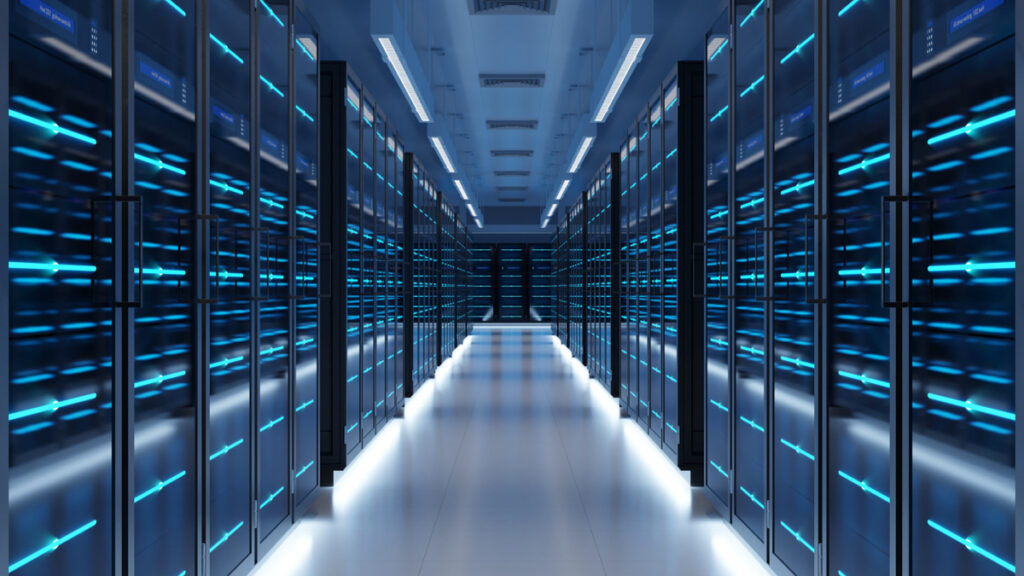
At the center of the deal is the newly detailed NVLink Fusion platform — a rack-scale solution engineered for both AI infrastructure and next-gen network deployments. Marvell brings custom specialized processors (XPUs), optical DSP technology, silicon photonics, and scale-up networking — basically the high-speed interconnect fabric that stitches compute clusters together. Nvidia, of course, contributes its Vera CPUs, ConnectX NICs, BlueField DPUs, NVLink interconnects, Spectrum-X switches, and rack-scale AI computing capabilities.
What you end up with is a heterogeneous AI infrastructure stack where enterprise customers can build semi-custom systems while staying fully compatible with the broader NVIDIA ecosystem. Customers get flexibility without giving up the software and hardware interoperability that makes Nvidia’s platform dominant. It’s the best-of-both-worlds — Marvell’s custom silicon paired with Nvidia’s ecosystem lock-in advantages.
The partnership doesn’t stop at the data center, either. Through the Nvidia Aerial AI-RAN platform, the two companies are targeting carrier-grade 5G and 6G network infrastructure, combining Marvell’s networking silicon with NVIDIA’s compute to essentially turn telecom networks into AI-capable infrastructure. The scope here is ambitious, reaching well beyond traditional AI workloads.
Why it matters
This deal lands during a period of extraordinary AI infrastructure spending. Hyperscalers are currently estimated to be investing north of $500 billion in AI data centers, and that buildout is driving massive demand for the optical data connections and custom silicon that Marvell specializes in. Wall Street analysts expect the partnership to fuel growth for Marvell.
Nvidia CEO Jensen Huang framed it through the lens of a shifting AI landscape. “The inference inflection has arrived. Token generation demand is surging, and the world is racing to build AI factories,” Huang said. “Together with Marvell, we are enabling customers to leverage Nvidia’s AI infrastructure ecosystem and scale to build specialized AI compute.”
Marvell CEO Matt Murphy positioned the deal as a natural evolution. “Our expanded partnership with Nvidia reflects the growing importance of high-speed connectivity, optical interconnect and accelerated infrastructure in scaling AI,” Murphy said. “By connecting Marvell’s leadership in high-performance analog, optical DSP, silicon photonics and custom silicon to Nvidia’s expanding AI ecosystem through NVLink Fusion, we are enabling customers to build scalable, efficient AI infrastructure.” For Marvell, that $2 billion investment serves as serious validation of its technology portfolio and its pivot from legacy hardware into AI-focused infrastructure. That said, validation and execution are two very different things.
Potential risks and execution challenges
For all the promise here, meaningful uncertainty comes with the territory. Revenue projections baked into analyst models depend heavily on adoption rates and how quickly NVLink Fusion infrastructure actually ships and deploys to customers. Double-digit growth through 2028 is a Wall Street forecast, not a certainty, and the AI infrastructure spending boom could cool if enterprise demand softens or hyperscalers decide to rein in capital expenditures.
Beyond the two companies, broader external variables loom large. Supply chain volatility — a persistent headache across the semiconductor industry — could constrain production or push back rollout timelines. And the telecom component introduces its own layer of complexity. Carrier-grade infrastructure deployments tend to move slowly and come with regulatory scrutiny that data center buildouts simply don’t face. The coming quarters will be critical in revealing whether this partnership delivers on its ambitious.