

Table of Contents
Blaize and Winmate want to bring secure, real-time decision-making to defense and critical infrastructure without cloud reliance
In sum – what we know:
- A mission-critical collaboration – Blaize Holdings and Winmate signed a non-binding agreement to integrate specialized AI inference silicon with ruggedized hardware for edge applications.
- Sovereignty over cloud – The partnership targets defense, maritime, and critical infrastructure clients who require real-time processing without relying on potentially insecure or bandwidth-constrained hyperscaler cloud data links.
- Uncertain execution – While the global edge AI market is projected to reach $57 billion by 2030, this deal remains in the early stages with no confirmed deployment timelines or binding contracts.
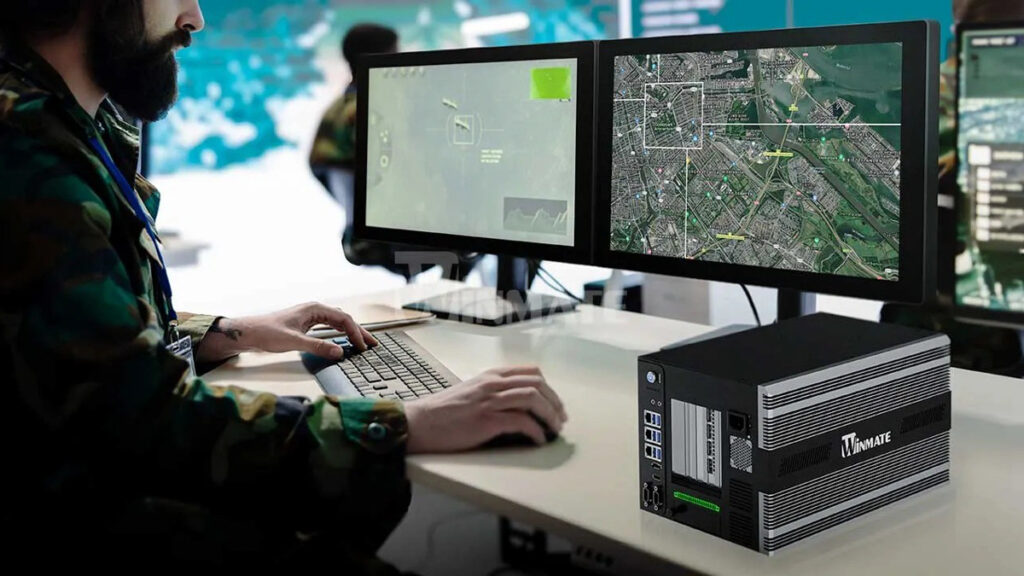
Edge AI is quickly becoming one of the most contested fronts in the broader AI infrastructure race, and this week brought another notable tie-up. Blaize Holdings and Winmate have announced an updated agreement to jointly develop sovereign, mission-critical edge AI systems, building on a Memorandum of Understanding the two companies signed in April.
The two companies aim to combine specialized AI inference silicon with ruggedized hardware, and target customers who can’t, or won’t, send their data to the cloud. Defense, critical infrastructure, maritime operations, and oil and gas all fall into that bucket, and all of them are increasingly hungry for real-time decision-making capabilities that don’t depend on a reliable data link back to a hyperscaler.
Whether this particular partnership delivers on that promise is another question. The agreement remains non-binding, the definitive contracts are still being negotiated, and deployment timelines haven’t been disclosed.
The deal
The updated agreement was announced on May 4, 2026, following the initial MOU signed on April 16. On one side of the table is Blaize Holdings, a California-based AI inference technology company. On the other is Winmate Inc., a publicly traded Taiwanese company that specializes in rugged computing solutions for harsh and regulated environments.
The MOU is non-binding, definitive agreements are still subject to negotiation by both parties, and final execution of the partnership isn’t guaranteed. Execution timelines for any deployed systems also remain to be determined. What has been announced is the intent to develop and deploy sovereign, mission-critical edge AI systems that provide secure, real-time decision-making at the edge for applications where strict data sovereignty and operational reliability are non-negotiable.
AI for defense
The division of labor between the two companies is fairly clean. Blaize brings programmable, energy-efficient AI inference technology optimized for reduced power consumption and latency, built around its Graph Streaming Processor (GSP) architecture. Winmate brings the ruggedized computing enclosures that can actually survive the environments these systems are meant to operate in.
The target markets are where things get interesting. Defense and national security lead the list, followed by critical infrastructure, transportation, aviation, and oil and gas. Specific use cases being floated include border surveillance, autonomous systems deployment, maritime vessel tracking, and remote diagnostics. These are exactly the kinds of applications where sending video or sensor data back to a cloud region isn’t practical, whether because of latency, bandwidth, or the fact that a foreign government probably shouldn’t have a copy of it.
Blaize CEO Dinakar Munagala framed it this way: “the future of AI is not defined by raw compute – it is defined by intelligence that is deployable, efficient, and secure at the point of action.” That’s a pointed contrast with the hyperscaler-and-GPU narrative that dominates most AI conversations, and it’s the bet Blaize is clearly making.
Edge AI is coming
The numbers behind the edge AI opportunity are striking. The global edge AI market is projected to grow from $11.8 billion in 2025 to roughly $57 billion by 2030, a 36.9% compound annual growth rate. The driver is exactly what Munagala is gesturing at – demand for low-latency AI processing at edge devices, rather than cloud-dependent solutions that struggle in regulated, bandwidth-constrained, or sovereignty-sensitive environments.
Blaize itself is a much smaller piece on the board. Its market capitalization sat at $202.5 million at the time of the announcement, and the stock has been volatile: shares fell 31% over the week of the announcement, though they remain up 66% over the past year. That kind of swing isn’t unusual for a small-cap AI hardware company trying to translate partnership announcements into revenue, but it’s worth noting that investors clearly aren’t pricing these deals as sure things.
This also isn’t Blaize’s first edge AI alliance, and it likely won’t be the last. The Winmate partnership joins recent tie-ups with Nokia, Reach Digital, BroadSat Technologies, and Turbo Federal, each aimed at a different slice of the edge deployment stack. It’s a reasonable strategy for a company of Blaize’s size – seed as many partnerships as possible, see which ones produce real deployments, and scale from there. The caveat is that the edge AI market is crowded with competing technology providers pursuing exactly the same playbook, and MOUs are cheap compared to shipping certified, deployed systems at scale. For now, Blaize and Winmate have staked out a promising position. Turning it into revenue is the harder part.