
 Susana Schwartz
Ceasefire's potential impact on AI infrastructure
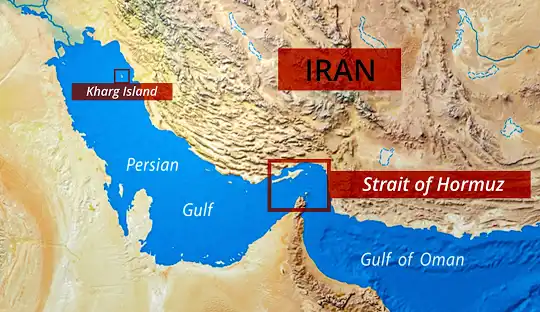
The announcement yesterday of a two-week “conditional” ceasefire in the Middle East is expected to provide a temporary reprieve for AI infrastructure and data centers, following weeks of direct attacks on facilities in the region:
- Amazon (Bahrain): Struck by Iranian drones on April 1, 2026.
- AWS (UAE): Two facilities were targeted by Shahed drones on March 1, 2026.
- Stargate AI (UAE): April 5 threats by Iranian officials about the $500 billion facility being built by OpenAI, SoftBank, and Oracle.
The damage to existing infrastructure doesn’t seem to be affecting current plans for neocloud and hyperscaler data centers being built in the Gulf region. Amazon, Microsoft, and Nvidia are expected to resume AI data center construction in the UAE and Saudi Arabia, despite damage sustained from drone strikes.
In terms of the energy expected to power those data centers, oil tankers are to be escorted through the Strait of Hormuz – under strict Iranian oversight and with the introduction of transit fees – which could help stabilize energy prices and the material supply chain. As of today, approximately 800 to 1,000 vessels remain trapped within the Persian Gulf, which S&P Global Market Intelligence estimates could take months to clear.
All of these factors may impact momentum for “sovereign AI,” with the region’s volatility coming into sharper focus. While the immediate threat of drone strikes on data centers has paused, neighboring states might pivot from purely economic AI goals toward more investment in defense and physical “hardening” to gain some autonomy from foreign influences.

Susana Schwartz
Technology Editor
RCRTech
AI Infrastructure Top Stories
Love triangle: Broadcom, Google, and Anthropic have inked massive compute and silicon deals, with Broadcom at the center – designing and supplying Google’s custom TPUs through 2031, and networking components for Google’s AI racks.
Bain & Co. report on AI, IOT squeeze: In a “state of Industry 4.0” report, Bain & Co. says the fastest-growing sub-segment for new AI-related tech is ‘manufacturing control’ software, worth $31 billion by 2030, up about 10 % (CAGR) in the period.
Fiber’s 20-pt checklist for AI readiness: RCRTech’s 20-point framework to evaluate AI readiness in fiber infrastructure – from physical scale to optical capability, automation, programmability, ecosystem integration, and transparency.
AI Today: What You Need to Know
Chindata-HEC 7.5 MW DC: Chindata and HEC broke ground on their 7.5MW data center in Hubei Province, China.The campus spans 6.3 hectares near Qinglin Temple, Gaobazhou Town, in Yidu, a city located in central China.
Intel joins TeraFab: Intel announced it will be a part of Elon Musk’s $20 billion TeraFab project. Intel will help develop, produce, and package advanced processors to boost compute for xAI, Tesla, and SpaceX’s AI and robotics applications.
Google to tap Crusoe power plant in TX: Google’s planned “Goodnight” data center campus will tap energy from a 933 MW natural gas power plant being built by Crusoe Energy in Armstrong County TX, according to research firm Cleanview.
Alibaba-China Telecom partnership: PUshing domestic AI infrastructure, Alibaba and China Telecom built a major AI data center in Shaoguan, Guangdong province, featuring 10,000 Alibaba Zhenwu AI chips for training and inference.
China’s influence on U.S. DCs: Bloomberg reports that the rapid expansion of U.S. AI data centers is heavily reliant on Chinese-manufactured electrical equipment—such as transformers, switchgear, and batteries.