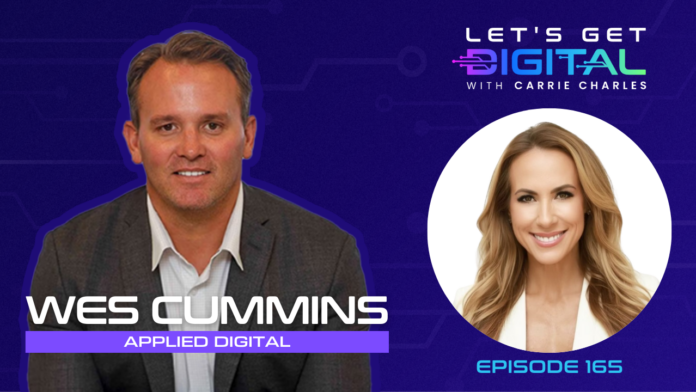
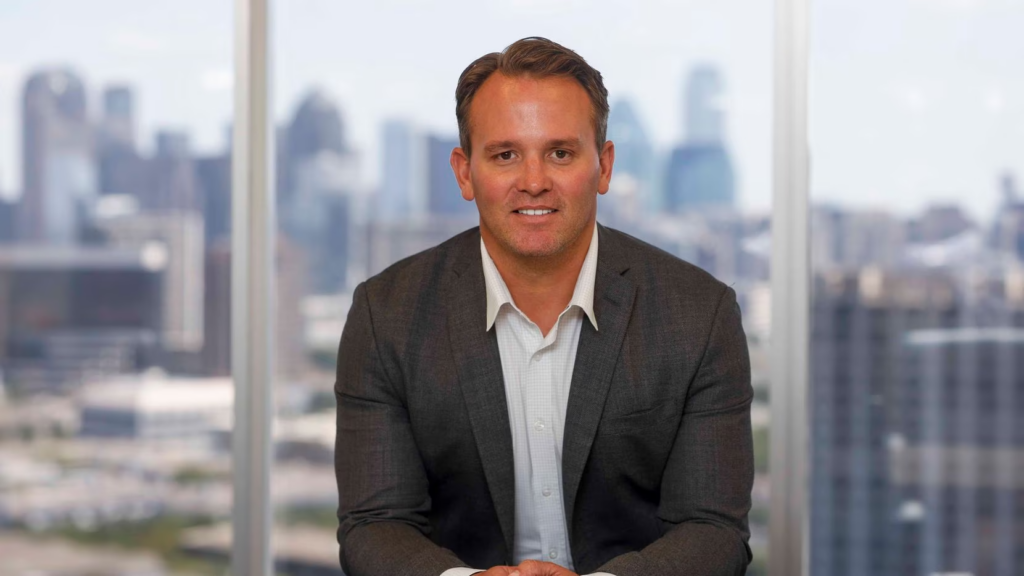
00:00 Ready to explore the cutting edge of 00:02 digital infrastructure? I'm Carrie 00:04 Charles, your host of Let's Get Digital. 00:07 Join me as we dive into the ideas, 00:09 technologies, and leaders transforming 00:11 the way we connect from wireless telecom 00:14 to fiber networks, [music] data centers, 00:16 and beyond. Sponsored by Broadstaff in 00:19 partnership with RCR Wireless News. 00:20 [music] 00:21 Now, let's dive in and let's get 00:24 digital. 00:26 Welcome to Let's Get Digital. This is 00:28 Carrie Charles. I'm your host [music] 00:30 and I am absolutely thrilled that you 00:32 are here. You are in for a phenomenal 00:35 show. [music] I have with me today Wes 00:37 Cumins. He is the founder and the CEO of 00:41 Applied Digital. [music] Thank you for 00:43 coming on the show, Wes. 00:45 >> Erin, thanks for having me. I appreciate 00:47 it. >> Yes. Let's get right into it. I have 00:50 heard that you have a very interesting 00:53 and inspiring story. So, I'd love to 00:56 hear a little bit about your journey and 00:59 what got you here today. 01:01 >> Yeah, I don't know if I have an 01:03 inspiring story, but I appreciate you 01:05 saying that. So, you know, I think some 01:08 people know, but it's an interesting 01:09 start to the story because of where it 01:11 finishes. Hopefully not finished yet, 01:13 but so I grew up in a small town of 200 01:16 people in Idaho on a potato farm. And 01:19 then I always make a joke of besides 01:22 working really hard, we worked on the 01:23 farm, it was still family farm times, 01:25 but the one thing I learned from working 01:27 on a farm besides hard work was that I 01:30 didn't want to be a farmer when I grew 01:32 up. Uh because it is a lot of hard work. 01:34 But the so I left went to college then I 01:37 became the got found myself into the 01:39 investing world. I was a tech investor 01:42 been a tech investor for 25 plus years 01:45 now. And as I spent a lot of time mostly 01:48 in tech hardware, semiconductors, 01:50 networking, a lot of infrastructure. And 01:52 then I saw an opportunity come along 01:55 which was actually in Bitcoin mining and 01:57 it was building data centers for Bitcoin 01:59 mining back in late 20. Started the 02:01 company in 21. Went aggressively into 02:04 building data centers in the US for 02:05 Bitcoin miners. And then in 22 we 02:10 started decided to start to add high 02:11 performance computing. It was a much 02:13 different industry at that time in the 02:15 early part of 22. So we hired some guys 02:18 that were building actually data centers 02:19 for Meta at the time. Designed a new 02:22 purpose-built high performance computing 02:24 facility, much smaller scale, and we we 02:26 started building it in in North Dakota 02:28 at our site in Jamestown, North Dakota. 02:29 The idea was we would add, you know, 02:32 small increments of high performance 02:34 computing alongside our Bitcoin 02:36 facilities, high power density, you 02:38 know, high power needs, cooling, which 02:40 is great for North Dakota. And so we 02:43 were building 10 megawatts in Jamestown. 02:45 By December of 22, we were running some 02:48 GPUs out of that our facility in 02:50 Jamestown. And we had a few customers, 02:53 mostly universities that were doing 02:54 machine learning and deep learning on 02:57 the GPUs. And then chat GBT happened. 03:00 And so chat GPT didn't really change 03:02 anything immediately when it happened. 03:03 It was you know was great to play around 03:05 with and you know it was novelty and 03:07 that it went to a million users faster 03:09 than any app and it just kind of kept 03:11 going. But then when Nvidia introduced 03:13 the H100 in March of 23 our world 03:16 started to change then so I was out 03:18 marketing data center capacity. We'd 03:20 happen to have built some capacity. It 03:22 was a pretty good fit for H100 50 03:24 kilowatt rack densities. And then it was 03:27 started getting introduced into uh 03:30 frontier model companies, AI labs and 03:33 what they wanted was just GPU capacity. 03:35 They want to deal with data center. So 03:37 we started offering GPU capacity by July 03:39 of that year. We had a little over a 03:42 thousand H100 GPUs online. Then we had 03:45 customers for that. But in that time 03:48 because of what I saw in the market, I 03:49 went back to my data center design team 03:51 and I said, "Guys, look, I know I said 03:53 we were going to do 10 or 15 megawws at 03:55 these sites. I think we need to go back 03:58 to building hundreds of megawatts of 03:59 capacity." And so we worked through 04:02 design. We actually worked with Nvidia's 04:04 data center team, which I think at that 04:06 point a lot of people didn't know that 04:07 really existed. We worked with the Cray 04:10 unit over at HPE that has a long history 04:12 in supercomputing. And we designed a 04:14 facility really around Blackwell. It 04:16 wasn't Cole Blackwell when we designed 04:17 it, but we were looking at the Nvidia 04:19 road map. And so we designed the 04:21 facility around that. We started 04:22 building it in 23 because we just 04:25 thought Nvidia is the clear leader here 04:27 and we want to just map to that. And you 04:29 know that facility had turned on last 04:31 month. The first capacity turned on last 04:33 month. The remaining capacity in that 04:35 building turned on this month. And then 04:38 we'll have another building following 04:39 that. Another one following that that 04:41 we've contracted all the core weave. And 04:43 then we have another campus that looks 04:45 similar to our Ellenell North Dakota 04:46 campus also in North Dakota that we've 04:48 contracted to a investment grade 04:51 hyperscaler. So we target Coreweave plus 04:53 the five investment grade hyperscalers 04:55 which are Microsoft, Amazon, Oracle, 04:57 Meta, Google. And so it's one of those. 05:00 We haven't been able to disclose which 05:01 one of those it is. So we're off and 05:03 running and we're building at large 05:05 scale and there's a lot of work and we 05:06 can talk about what went around that. to 05:08 bring this full circle is we're doing 05:11 this in small agriculturalbased towns, 05:16 both of them right now in North Dakota. 05:17 We're looking at other towns, but for me 05:19 it's a really, you know, personal 05:21 journey and interesting for me to be 05:23 able to bring the absolute leading edge 05:25 of technology to a town that's similar 05:28 in size to what I grew up in. Right? I 05:30 mean, Ellen's five times the size of 05:32 what I grew up in, but still a very 05:34 small town. Great people, great 05:36 community. We work really closely with 05:38 the community and really try to be 05:41 instrumental in positive change and the 05:44 projects that we're doing are just such 05:45 a perfect fit for these communities. And 05:48 that it's a bit of a headache when we're 05:49 doing the construction part of it, but 05:51 at the end you bring a few hundred jobs, 05:54 maybe three 400 jobs into a location. 05:56 You don't change the face of the 05:58 community. You create a a massive amount 06:00 of tax revenue for the community. So now 06:04 Allenale, North Dakota becomes the 06:06 wealthiest school district in the state 06:07 that the community things that you don't 06:10 think of. So you go to the these towns 06:11 and now all of a sudden they were doing 06:14 special tax assessments to fix their 06:16 sewer system, to do their freshwater, 06:18 fix a road, and now all of a sudden they 06:21 have a budget that they can fund all of 06:22 these programs without taxing the 06:24 residents. Because what you'll find in 06:25 these small towns is typically property 06:27 tax is higher than it would be, you 06:30 know, in a larger city because you have 06:32 to provide these same essential 06:33 services. But it and then it also has 06:36 been rewarding in that it has actually 06:37 allowed people who grew up in Ellen, 06:40 North Dakota, left because there was no 06:42 real job prospect in Elendale, North 06:44 Dakota. And they've actually come back 06:46 to work at our facility and their 06:48 families there. And it's really 06:50 interesting to me and rewarding and how 06:52 it's kind of went very much full circle 06:55 coming from a small town. We were the 06:56 people left behind. We were the last 06:58 ones to get the internet. I think my 07:00 parents stopped using dialup internet in 07:02 like 2018. So, and they still live 07:04 there. But, so it's it is a good full 07:06 circle story. 07:07 >> I am hearing about applied digital 07:10 everywhere. And in fact, I was at a 07:12 meeting this morning with entrepreneurs 07:15 and it's just a smaller mastermind and 07:17 somebody in the meeting said, "I just 07:19 bought the applied digital stock today." 07:21 And I said, "Well, that's interesting 07:22 because I'm interviewing the CEO today." 07:24 So, congratulations on all your success. 07:28 And are you talking about that the 07:30 Polaris Forge 2, was that what you were 07:32 just talking a little bit about? 07:34 >> Polaris Forge One is in Ellenale, North 07:36 Dakota. Polaris Forge 2 is in Harwood, 07:38 North Dakota. So in players forge one is 07:40 where we've contracted core weave for 07:42 400 megawatts of critical IT load and in 07:45 players forge 2 is where we've 07:46 contracted the investment grade 07:47 hyperscaler building the same designs 07:50 you know our building design we put a 07:52 lot of work into this we're on our 07:53 fourth generation of data center designs 07:55 so we've made a lot of improvements I 07:58 would say both in you know the scale the 08:01 flexibility the speed at which we can 08:03 build these now and the cost at which we 08:05 can build them and then efficiency and 08:08 the flexibility is key for the future, 08:10 right? Because we're I I always make a 08:12 joke that operating in the AI ecosystem 08:15 is like operating in dogearss and it 08:17 truly is and the change is so fast. And 08:20 so we're building assets that we expect 08:22 to last for 30 to 50 years. Then we need 08:25 to try to futureproof those as much as 08:27 possible. So we give those as much 08:29 flexibility as we possibly can in these. 08:31 But yeah, we've made a lot of progress. 08:32 So we started the company 5 years ago 08:34 and now so we still operate 300 08:36 megawatts of Bitcoin data centers but 08:38 now we have 700 megawatts of critical IT 08:41 load under construction 16 billion of 08:44 contracted revenue between two customers 08:46 over 15 years. So it's been an eventful 08:48 year. I mean it's been a lot of work and 08:50 a lot of stress but it's been a really 08:52 good rewarding year so far. But the 08:54 year's not finished yet. Let's see how 08:56 it finishes out and see what else we can 08:58 do. >> That's incredible and five years. What 09:01 is your signature advantage? How did you 09:03 do this? Give me a secret. [laughter] 09:06 >> There's no real secret other than we 09:09 were early. So, you know, in 2023 and it 09:12 was only 2 years ago, but again, dog 09:14 ears, right? And so, when I saw what was 09:16 happening and I saw the demand level and 09:19 at that time the real focus was getting 09:23 could you procure H100s from Nvidia, 09:25 right? There was no ability to procure 09:28 these. there was such so if you placed 09:29 orders you weren't getting delivery for 09:31 6 plus months and so everyone was very 09:34 focused on procuring the GPUs and me 09:37 with my history and background as a 09:39 hardware investor I thought to myself 09:41 that you know they're going to fix wafer 09:43 throughput at TSMC they're going to fix 09:46 the co-as packaging the advanced 09:48 packaging for the semiconductors they're 09:50 going to fix bottlenecks in transceiver 09:52 manufacturing and so like they'll fix 09:54 all of this but then what will happen is 09:56 the GPU supply chain itself self will 09:58 balance out with the demand. But I was 10:01 looking at the data center space and I'm 10:03 going where are we going to put all of 10:04 these GPUs and eventually I think I 10:07 tweeted about this in the summer of 23. 10:09 They said data center space is going to 10:10 be the issue. Eventually that's going to 10:12 be the issue. And I I thought it might 10:14 be all the way to 25. It could happen in 10:16 24. that there was so little of this 10:19 high power density data center capacity 10:21 in the market cuz the vast majority of 10:22 data center capacity was built for 10:24 streaming and all of our video apps and 10:26 pictures and messaging and all of those 10:28 are really CPU based data centers and 10:31 they only need like I think the average 10:33 density power density is like 7 10:35 kilowatts a rack and then if you want to 10:37 be efficient with H100 you need to be at 10:40 50 and then when we look at Blackwell 10:42 now where we're deploying it's at 135 kW 10:45 a rack and so the power densities went 10:47 up and so now you need different style 10:48 of cooling because you like air cooling 10:50 works to about 50KW and then you need 10:53 liquid cooling after that. And so I was 10:55 just working through this in my mind and 10:56 going how are we going to get power? How 11:00 are we going to get permits and how are 11:02 we going to build and deal deal with the 11:04 supply chain and I'm going the the 11:06 semiconductor supply chain knows how to 11:08 ramp up really quickly. How do you deal 11:10 with all of that? And so we did that 11:12 early and we started early and then we 11:14 went and built a team really early 11:16 before the demand kind of is what it is. 11:18 And so we put a great team together and 11:20 we you know we stubbed our toe in how we 11:23 did things. So we kind of started with 11:25 we're going to retrofit Bitcoin 11:27 facilities and then we abandoned that 11:29 pretty quickly and then we were going to 11:31 build a scaleown version and this was 11:32 before the chat GBT had showed up and so 11:35 we' kind of been through iterations and 11:36 by the time we went to large scale we 11:39 said look we have this design we worked 11:41 with the leader for GPUs in the industry 11:44 the real leader in AI innovation from a 11:46 hardware perspective and so we designed 11:48 to that and then we went out and secured 11:50 supply chain around that and so now 11:51 we're sitting I thought you know 18 11:53 months months ago, I was super 11:54 optimistic securing, you know, 6 or 700 11:58 megawws per year of MEP, mechanical, 12:01 electrical, and plumbing for our supply 12:03 chain. And now I don't think I was 12:05 optimistic enough. But we went and 12:06 secured these so that we can actually 12:08 build, we can deliver for our customers 12:10 because there's a lot of news and 12:12 there's a lot of big contracts, a lot of 12:14 announcements. And I've been saying 12:15 lately, you know, it's really fun to 12:17 make big announcements and signing 12:19 contracts, but you have to deliver on 12:21 those contracts. like that's the next 12:22 step. And so we're actually delivering. 12:24 We turned over the first half of our 12:26 building on schedule. Turned over the 12:28 second half of our building ahead of 12:29 schedule and we're working to really 12:32 deliver that second building ahead of 12:35 schedule as well because our customers 12:36 are really needing the space. So we're 12:38 trying to pull that ahead and I think we 12:40 will pull that ahead. But the key here 12:42 is, you know, not only signing the 12:44 contracts, making the design, but 12:45 actually building and delivering a 12:47 product on time and for the customers so 12:50 that our customers could be successful 12:51 as well. So the real advantage here is 12:53 we started early. We've made some 12:55 mistakes. We've ironed a lot of those 12:57 out and we have a really streamlined 12:59 process now for supply chain for 13:00 building. We have a lot of power from a 13:02 site perspective. So we're just in a 13:04 really good position. So there's another 13:07 bottleneck in the data center world and 13:10 that is people and workforce. So is that 13:13 affecting you or how is that affecting 13:15 you? 13:16 >> Yeah, so like I said with our team that 13:18 manages construction and does design and 13:21 does operations, we did that early and 13:23 so that was great. We have really 13:25 fantastic people in place for that. And 13:28 then there's dealing with the local 13:30 labor that actually builds the facility. 13:33 And one of the things that we have done, 13:34 so we've carved out this spot for 13:37 ourselves in North Dakota and then and 13:39 we looked at North Dakota. We said, 13:40 "Look, it's abundant power. They're 13:42 generating 8 to 10 times the amount of 13:44 energy in the state versus what they 13:46 use." The former governor Doug Bergam 13:48 who's now secretary of interior, one of 13:51 his biggest agenda items in the state 13:54 when he was governor was we want to use 13:56 the power, the energy that the state 13:58 generates for the economic benefit of 14:00 the state rather than exporting it. Here 14:02 we are, right? So, we bring that use 14:04 right into the state and we started with 14:06 Bitcoin and now we're doing it with AI 14:08 data center. So, you have that you have 14:10 a cold climate which is phenomenal and 14:13 the cold climate allows us to run at a 14:15 much higher efficiency. So, PUE so the 14:17 power that we use goes mostly to the IT. 14:20 So we published a white paper back in 14:22 June because of the location with the 14:24 abundant lowcost energy because of the 14:26 weather we actually can save our 14:28 customers versus southern states on 100 14:30 megawatts roughly 50 to 65 million per 14:34 year in operating costs. That's savings 14:36 to our customers. That's a huge benefit 14:38 over time. And so we're signing 15-year 14:40 contracts. So you can just do the math 14:42 and even, you know, that's on 100 14:44 megawatts, $750 million on the low end 14:46 that you're saving over that contract 14:48 length. So big deal there. And then a 14:50 lot of fiber in the state from a 14:52 connectivity standpoint because you have 14:53 a lot of cross-country routes that run 14:55 through North Dakota. But here back to 14:57 the point of the question, we're 14:58 creating a data center region there and 15:00 we're the only ones doing it. So we have 15:03 really good handle on the local labor 15:06 force for building. And even better, 15:08 we're not competing with, you know, 20 15:11 other data center sites like we would be 15:13 if we were operating in Texas or if we 15:15 were operating in other states that are 15:16 much bigger data center states. And 15:18 we're creating the region ourselves. 15:20 We're creating the data center region in 15:22 North Dakota. And now we have two 15:24 hyperscalers in North Dakota. I think 15:26 we'll add more to North Dakota. We'll 15:28 add some to South Dakota as well and 15:30 just create that region. But have that 15:32 labor force that's more captive to apply 15:34 digital instead of us plus, you know, an 15:37 electrician or a plumber can just drive 15:39 20 or 30 miles down the road and get a 15:41 10% raise. Now, we do spend a lot of 15:44 time, you'll laugh at this, but we treat 15:46 the construction people on site really 15:48 well. I was having a conversation two 15:50 weeks ago, with Brad Barton, who leads 15:52 construction for us about the catering 15:55 and curating menus so that the food is 15:57 really good on site. And so we do these 16:00 things and I'm like but with like 16:02 there's a lot of things on my bingo card 16:04 that I would have never thought that I 16:05 would be doing, you know, al going 16:07 alongside of building data centers and 16:09 curating menus and what the catering 16:11 looks like on site was one of those 16:13 things. But we do, you know, we want to 16:16 be a great place to work when you're on 16:18 site so that we retain the labor that's 16:20 there and is already done. If they're 16:21 doing building one, we want them for 16:23 building two and building three and 16:24 building four so it's just easier to 16:25 retain that labor. But it is in a lot of 16:27 areas it's a huge issue. Huge issue. 16:30 >> Yes, I agree. The you know performance 16:33 drives culture and obviously everything 16:36 you're doing is in alignment with that 16:39 including feeding the construction 16:41 people. So tell me a little bit about 16:43 your you know your culture and you are 16:45 scaling fast you know what does it look 16:48 like and what does leadership look like 16:51 inside of this you know this rapidly 16:53 scaling environment. 16:55 >> Yeah. So the day I started the company, 16:58 my number one goal from a culture 17:01 perspective was I wanted to create a 17:03 company where people were excited on 17:06 Sunday night, right? That that was 17:08 number one for me. I want people to be 17:11 excited on Sunday night and I want them 17:13 to, you know, be feel like we're making 17:16 a difference. They get to see their 17:17 impact inside the company. And we're 17:19 we're a small, you know, we've gotten to 17:20 be much bigger, but we're still my view 17:22 a small company. We very much try to 17:24 create an underdog mentality, which is, 17:26 you know, it's always great to have 17:28 that. I'm a big sports person, so you 17:30 know, I always talk to people like I 17:32 feel like I'm now the the head coach of 17:34 the football team, right? And and so 17:36 it's but we have a an underdog 17:38 mentality. And then I would just say 17:40 that the culture outside of that is we 17:42 just get stuff done, right? We make it 17:44 happen. I have a lot of problem solvers 17:47 in inside the org. We've hired just the 17:50 right people. You know, we've been 17:51 growing fast. So you don't always hire 17:53 the right ones. We've had some mistakes 17:55 there for sure, but we hire the right 17:57 people that can get the job done, put 17:59 them in the place, in the seat, and just 18:02 let them run. And so I try to remove 18:05 those roadblocks for people to let them 18:07 do what they do best. And you know, we 18:09 hired Todd Gail, who runs data center 18:11 design for us. That was a huge hire. And 18:13 he's just been an absolute home run for 18:15 the company. Brad was a DPR. He was 18:18 building data centers for hyperscalers. 18:20 On the construction side, we brought in 18:22 Laura Lello who came to us from 18:24 Honeywell was at the Lenovo prior to 18:27 that as doing operations for us. She's 18:28 been great. Then my co-founder Jason has 18:31 just really come up to speed and he's 18:33 been he's a fast learner. You know, he 18:35 went to Harvard, so he's a smart guy, 18:37 but he's been, you know, really 18:39 instrumental in getting the company to 18:40 where it is. And there's just there's so 18:42 many people I can't list, but getting 18:43 the right people in the right seats and 18:45 then removing roadblocks from them and 18:47 everyone's excited. You know, we're 18:50 building some of the largest scale 18:51 projects. We're building the largest 18:53 scale project in the history of North 18:55 Dakota for sure, but some of the largest 18:57 scale projects in the country and in the 18:59 world and it just creates a lot of 19:00 excitement inside the company 19:02 >> and a lot of excitement throughout the 19:04 entire country and world and that's what 19:07 we're hearing right now. So, what do you 19:10 see in the way of you know trends where 19:13 the industry is going? what are we 19:15 underestimating if anything about where 19:18 the space is headed? So I think one of 19:20 the biggest kind of pieces of 19:23 information that I don't think is 19:25 correct that I think flows around in the 19:26 market is still this thought process 19:29 around we're going to build some 19:32 training sites in more remote locations 19:35 and then all the inference is going to 19:37 be built out in population centers like 19:40 traditional data center. And when we're 19:42 working with our customers and when 19:43 we're working directly with the largest 19:45 frontier models in the world, you know, 19:48 we're hearing the exact opposite. You 19:50 know, our site is a dual use training 19:53 and inference site. Our next site is 19:54 also dual use and we expect them all to 19:56 be dual use training and inference 19:58 because we have to drive cost down in 20:01 the industry. And so I do think there 20:03 will be some inferencing that's done, 20:05 you know, like CDN style, content 20:06 delivery network style in metro areas, 20:09 but I think a vast majority is going to 20:11 be in sites like we're building and 20:12 other people are building because when 20:15 you think about efficiency on a site and 20:17 driving cost down. So what's the most 20:19 expensive part of this entire ecosystem? 20:23 It's the hardware itself, right? So the 20:25 Nvidia GPUs, they could be AMD, but 20:27 mostly Nvidia GPUs is what we focus on. 20:30 So that's the most expensive part. And 20:32 so that means you need to get as close 20:35 to 100% utilization as you possibly can 20:38 out of those GPUs. So you want them in a 20:40 location where if they're not being used 20:42 for training, they can be used for 20:43 inference. And if they're not being used 20:45 for inference, they can be used for 20:46 training. And so you don't want a 20:48 location where you have, you know, tens 20:50 of thousands of GPUs sitting around and, 20:52 you know, the entire country is asleep. 20:55 And so, you know, the usage goes from 20:57 95% down to 5%. And you don't have 21:00 anything else to do with those. And 21:01 that's 10 hours out of the day. It 21:03 drives your cost up way too high. And 21:06 so, we see a lot more sensitivity around 21:08 cost and the whole ecosystem. And that's 21:10 just been tech, you know, from the 21:12 history of tech is you got to get the 21:13 cost down over time. It's how, you know, 21:16 we're sitting with laptops on our desks 21:18 that are, you know, significantly more 21:20 powerful than mainframes were at a 21:22 fraction of the cost. But we're doing 21:23 the same here. But one of those key 21:25 steps is you need 100% as close to 100% 21:28 utilization as you can get out of these 21:30 GPUs. And so I think the trend is really 21:32 for these large scale sites and they're 21:35 not going to be built in metro areas. 21:37 And this is where most of the 21:38 inferencing is coming from anyways at 21:40 this point. So that's probably the 21:42 biggest one and the trend that I expect 21:43 to continue is just more and more scale. 21:46 We're talking with some customers at our 21:49 sites about I'm a really optimistic guy. 21:52 I have to be an optimistic guy to be 21:54 crazy enough to go build a $1.2 billion 21:56 building in the middle of nowhere with 21:58 no customer, right? And even I 22:01 underestimated the scale as to what 22:03 we're talking about on single locations. 22:05 I was thinking a gigawatt is, you know, 22:08 a massive amount on a single location. 22:10 We've been having discussions around, 22:12 you know, 5 to 10 gigawatts on a single 22:15 site, which is these are theoretical 22:17 discussions about what you could do from 22:18 lowering a cost, you know, the cost of 22:20 the build and getting everything more 22:22 efficient, but we're just seeing that 22:24 kind of demand and that kind of thought 22:25 process on the types of sites that we're 22:27 working on. 22:28 >> So, what drives you, Wes? What makes you 22:31 just jump out of bed in the morning on a 22:33 Monday morning because you're so excited 22:35 on Sunday night, right? [laughter] 22:37 Oh, so generally I gave that for me it's 22:40 not quite that because being excited on 22:42 a Sunday night because work never really 22:44 stops on the weekend. You can check my 22:46 wife on that. She'll confirm. But for me 22:48 it's a couple of things. So you know 22:50 it's obviously running the business 22:52 daytoday is you know got all of the 22:54 challenges of problem solving. And what 22:56 I learned about myself years ago is when 22:58 I was doing investing it's why do I like 23:00 this so much? It's like I like puzzles, 23:02 right? And so you're just solving a 23:03 puzzle all the time and you're doing 23:05 that with the company as well, whether 23:07 it be operational or whether it be 23:09 construction or on design or new 23:12 customers, right? It's all of these 23:13 things of trying to put all the pieces 23:14 together. And so I like that. But it's 23:17 been exciting on almost all aspects, 23:19 right? So we're in a place of we're both 23:22 delivering and winning new contracts. 23:25 And so like I'm kind of in the best of 23:27 both worlds right now where we get to be 23:29 doing both because the market's just 23:31 there for it right now. But probably the 23:34 most excited I get is just thinking 23:37 through the possibilities of the future. 23:39 Like I don't have enough time for it 23:40 these days, but I could do hours of 23:42 discussion around a lot of the whatifs 23:44 and the trends and what we have to be 23:47 ready for in the future. And we think a 23:49 lot about this and we try to make sure 23:50 that you know I was talking about future 23:52 proofing our data centers. There's so 23:54 much new technology coming in in a 23:57 physical format which is for me even 24:00 better versus you know just from an 24:01 excitement perspective versus software. 24:03 So you know there's a lot of problems 24:05 that we're solving and there's going to 24:07 be more problems but you know we're 24:09 spending a lot of time on load balancing 24:11 on site with batteries with super 24:13 capacitors. We're spending time on a lot 24:15 of time on cooling on power 24:17 distribution. So I'm spending a fair 24:20 amount of time on looking at uh compound 24:22 semiconductor solutions for power 24:24 distribution inside of the data center 24:25 for more efficiency. It's kind of 24:27 similar of how EVs went from silicon to 24:30 silicon carbide. I think we'll see 24:32 something similar in the data center 24:33 because we need to go from 415 volts up 24:36 to 800 volt distribution on the next 24:38 generation. So the new technology 24:40 because I've been a technology investor 24:42 for a long time. That's always probably 24:44 the most exciting part for me. 24:46 >> So how do you get your information? Do 24:47 you have time where you just sit and 24:49 read and subscribe to newsletters and 24:52 talk to people? I mean, how are you 24:54 seeing the future? 24:56 >> Just to do a shameless plug here, chat 24:58 GPT. 24:59 >> There you go. 25:00 >> But I do ask chat a lot of things, but I 25:03 read constantly on, you know, new 25:06 products that come out. I love listening 25:08 to the talks or the interviews or panels 25:13 that engineers sit on that are in the 25:15 industry, whether it be, you know, 25:17 specifically data center engineers or 25:19 the data scientists that are working for 25:21 some of these frontier model companies. 25:23 I love listening to the way they're 25:25 thinking through, you know, solving the 25:28 future, whether it's with, you know, 25:29 large language models or with uh 25:31 humanoids or whatever it might be. But I 25:34 love listening to a lot of those 25:35 interviews because you know like reading 25:37 articles is great but like hearing from 25:40 also like very smart people that have 25:42 digested a lot of information are 25:44 sitting on the front lines like that's 25:46 one of my favorite places to get 25:47 information. 25:48 >> So it's 2035. Tell me about applied 25:51 digital. So 2035 again reminder dog 25:54 years for AI but for us when I look out 25:57 to the future you know we're executing 26:00 and we're in discussions with almost 26:04 every single hyperscaler and advanced 26:06 discussions in some cases for new 26:07 campuses and when I look out to the 26:10 future it was a big breakthrough when we 26:11 landed core right that's our first 26:13 contract that was a big relief for me 26:15 again that big risk on that building in 26:17 Ellenale and then we have our second one 26:19 we're just gaining momentum And we've 26:22 been qualified with basically every 26:23 hyperscaler. I have different 26:26 conversations now than I did a year ago 26:28 where a year ago if I sat down with a 26:30 hyperscaler it would, you know, be 15 or 26:32 20 minutes of explaining who we are and 26:33 what we do. Now we're known. So we just 26:35 get right down to what, you know, here's 26:37 what's available and what we can build 26:38 for you and then, you know, and then the 26:40 price talk always shows up. But we have 26:42 the two campuses. I think we'll get a 26:45 third and a fourth and a fifth. And if I 26:47 have five of these campuses amongst 26:49 different customers, they all go to over 26:51 a gigawatt. So if I'm looking at what 26:53 can we actually build, you know, and I 26:55 look through that pipeline through, you 26:58 know, 2030 or 2031, we could build that 27:01 out, right? We could build out 5 plus 27:02 gigawatts of capacity for these tenants 27:05 and they're all great tenants, a lot of 27:08 stability, contracted revenue, so we get 27:10 great visibility. As much as I love, you 27:12 know, the building with no customer, 27:14 building with a customer already is a 27:16 lot more fun, I found. So the, you know, 27:19 just executing and then continuing on 27:22 the forward thinking from an 27:23 infrastructure perspective. And we've 27:25 already started down the path of power 27:27 generation and bringing more power to 27:29 our locations over the next few years. 27:31 That'll just continue. And so we're just 27:33 we have kind of our hands in every part 27:35 of the ecosystem. We stay away from, you 27:38 know, being in like an actual, you know, 27:40 language model or doing any data 27:41 scientists oursel, but we we try to be 27:43 the best at what we do and as 27:45 forward-looking as we can be. And we're 27:47 seeing that, you know, really start to 27:49 pay dividends for us as far as the 27:51 interactions with current customers, 27:54 potential customers, and kind of the the 27:56 scale that now that I think our company 27:59 can be by 2035 is just wildly bigger 28:03 than I thought it could be a year ago. 28:05 you know, when you're trying to do that 28:06 breakthrough for just I I want to sell 28:08 this 100 megawatt building to someone. 28:10 Now, my mindset is just very different 28:12 and I really think that we can be the 28:15 leader in the industry and one of the 28:17 largest companies if not the largest in 28:18 the industry just given the momentum 28:20 that we have and what I see on the 28:22 demand side for us and how good I feel 28:24 about the team we have in place and the 28:25 ability to execute on that road map. 28:28 Right? Right. It's one thing about just 28:29 dreaming up a road map, but like I feel 28:31 really confident in that our ability to 28:32 actually execute on a really big road 28:35 map like that. 28:36 >> And also don't forget Wes, your passion 28:39 and your purpose. It's inspiring, right? 28:42 That's going to be a huge driver of 28:43 where you're going. So, thank you so 28:45 much for coming on the show. This has 28:46 just been phenomenal. Congratulations on 28:48 your success. I cannot wait to see where 28:51 you're going to be in 2035 and beyond. 28:54 >> Thanks, Gary. I really appreciate you 28:55 having me. 28:56 >> All right. Take care. 28:57 >> You, too. 28:58 Thanks for tuning in to Let's Get 29:00 Digital. This podcast is powered by 29:03 Broadstaff, a national staffing firm 29:05 specializing in digital infrastructure 29:07 talent. Don't forget to subscribe, leave 29:09 a review, and join me next time as we 29:12 explore more stories at the intersection 29:14 of technology, [music] talent, and 29:16 transformation. Until then, let's get 29:19 digital.
No matching passages. Try another word.