

Table of Contents
Samsung has added LB Semicon to its chip-testing network for handling post-processing of the flagship Exynos 2600 chips
In Sum — What to Know
Samsung adds LB Semicon to its chip-testing network: Samsung adds OSAT provider, LB Semicon — part of rival company LG Electronics — expanding its supply chain of testing partners.
Wafer-testing of the Exynos 2600: LB Semicon will support wafer-testing of Exynos 2600, the chip that will reportedly power 25% of the upcoming Galaxy S26 series, besides Snapdragon.
Wider Galaxy S26 rollout and volume Exynos production: The move signals preparation for a wider rollout of the Galaxy S26 series — and mass production of the Exynos processor in Samsung Foundry.
Amid broader demand for semiconductors, Samsung is ramping up its chip-testing capabilities.
The electronics giant recently brought on board LB Semicon — an outsourced semiconductor assembly and test (OSAT) provider — expanding its chip-testing network ahead of the wider rollout of Galaxy S26 series next year.
LB Semicon, an affiliate of LG, has secured the contract for wafer testing of the Exynos 2600 chipset, and will work alongside Doosan Tesna and Nepes. According to reports, LB Semicon is preparing for operation at the Anseong factory, and is expected to start work soon.
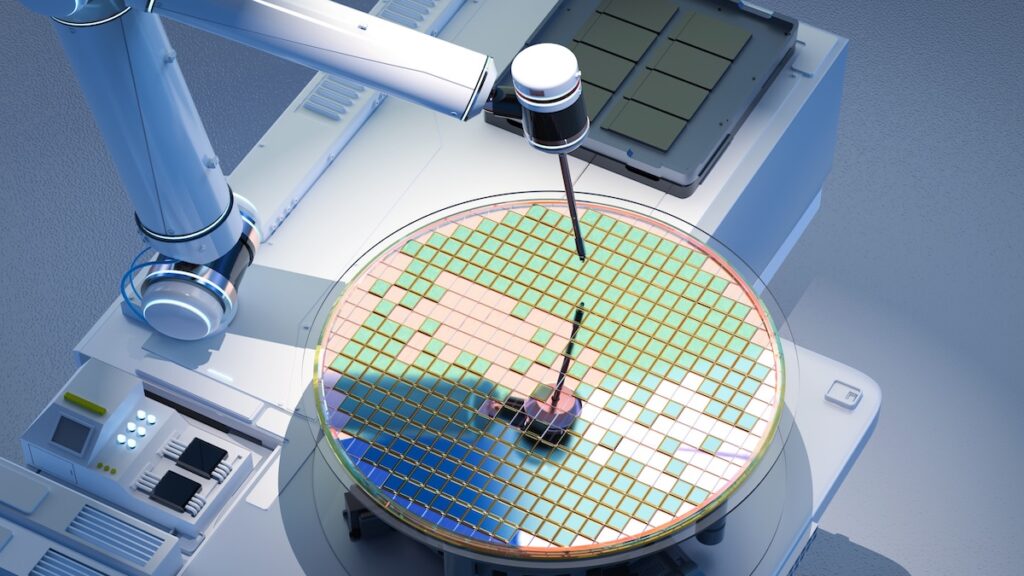
Wafer testing, a critical function in semiconductor quality assurance, entails electrically screening individual dies on a wafer for defects and functionality issues. The process identifies known good dies (KGD) at the packaging stage, preventing faulty and non-conforming dies from advancing into the next stage of production.
Paired with process monitoring, wafer testing helps catch issues early, reducing production costs while improving yield.
Samsung already commanded a decent-size chip-testing supply chain with Doosan Tesna and Nepes as partners. The addition of a third provider signals mass production and volume shipments of the Exynos chipset. Early reports on the chip appear favorable, and with Samsung’s foundry yield reportedly on the higher side, the ramp-up seems timely as Exynos 2600 is expected to power the flagship Samsung S-series in Europe and Korea.
Samsung’s semiconductor business suffered a 40% quarter-on-quarter profit decline in 2024, placing it well behind rivals like TSMC and SK Hynix.
LB Semicon has previously handled wafer testing for Samsung’s low- and mid-range Exynos chips including those used in certain Google Pixel phones. More recently, the company has expanded into high-end semi devices to reduce reliance on display driver ICs (DDI), paving the way for its selection to validate Samsung’s premium Exynos line.
In related news, Samsung has also signed a new deal with SK Telecom to advance AI-RAN development. Under the agreement, Samsung Research will lead the development work, while SK Telecom will provide its network testing infrastructure and operational and deployment data, valuable for R&D.
The partnership establishes a domestic testbed for Samsung that could expedite development timelines, and potentially give both providers an early lead as the industry marches toward 6G.
