Susana Schwartz
Can U.S. AI leadership, open-source AI and national security coexist?
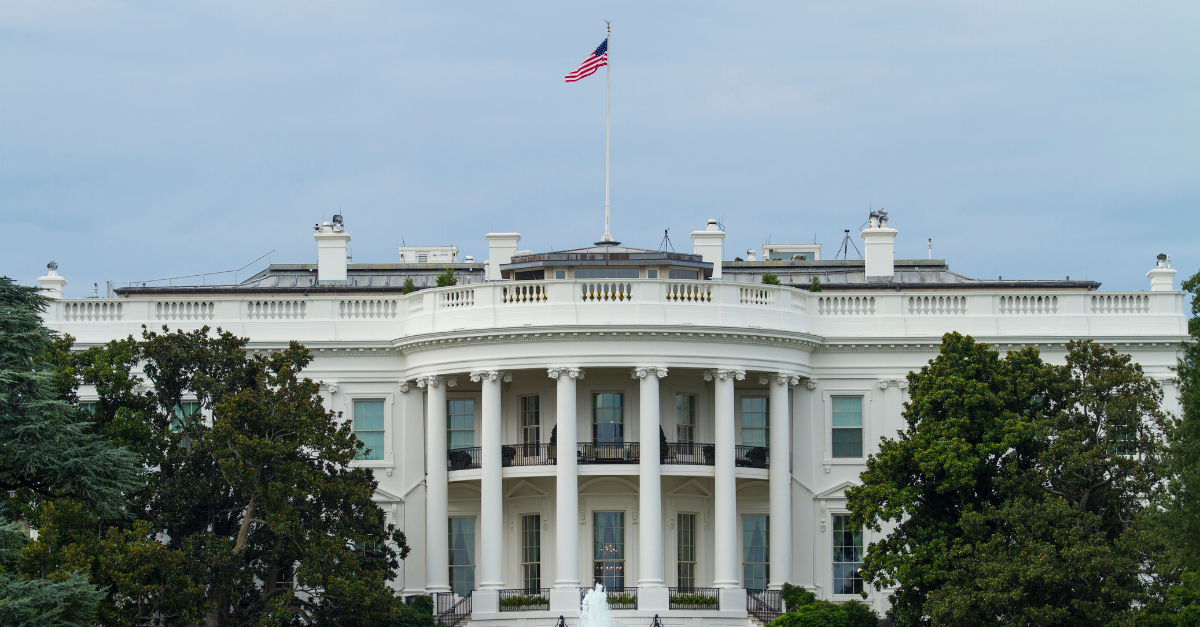
Today, President Trump meets with Meta, Anthropic, OpenAI and Google to discuss “voluntary government safety testing” of AI labs’ advanced models for cybersecurity and hacking capability assessments. Embedded in those discussions will be lobbying efforts for and against regulating and restricting open-source models.
OpenAI and Anthropic have been pushing for more restrictions on open source and open-weight models, especially those from Chinese models like DeepSeek, Qwen, and Kimi. On the other side, Meta, Nvidia, Microsoft, and the Open Source AI Alliance are pushing for protections of domestic open-source and open-weight AI models.
Software engineers and developers overwhelmingly support open-source as a way to counter monopolies and as a means to lower development costs through lower-friction, customizable tools that also preserve their marketability across different employers (rather than being locked into proprietary tooling). As one software engineer I reached out to this morning put it in his blog, “Lets be real…it’s about protecting their moat…Their entire business model relies on developers like us paying a toll for every single API call. If we can just download a powerful open-source model, tweak it for our specific use case, and run it on our own hardware, their leverage completely disappears. Open source commoditizes their core product.”
Indeed, most developers want smaller, faster models that can be easily tweaked to specific use cases, and without having to pay a toll for every API call. They don’t need a model that knows the capital of Latvia or the basics of high school chemistry, so most software developers and engineers are passionately advocating for allowing domestic open-source AI to flourish. In agreement, some tech strategists assert that domestic open source is the primary way to defend against Chinese open-source systems.
Is it possible for U.S. AI models to remain dominant on the global stage, while also allowing domestic open-source to compete with Chinese open-source? That’s the question Trump, Howard Lutnick, Susie Wiles, Scott Bessent and AI leaders will be debating today.

Susana Schwartz
Technology Editor
RCRTech
AI Infrastructure Top Stories
Addressing CoWos shortage: The 2026 CoWoS shortage has driven TSMC to develop “quasi-EMIB,” which embeds small silicon bridges in Kinsus’ organic substrate, mirroring the Intel setup Nvidia is evaluating for its Feynman GPU.
Understanding immersion cooling: As rack densities and thermal loads grow, immersion cooling is a viable option to consider, but organizations must consider infrastructure compatibility, maintenance, and upfront investment.
AI Today: What You Need to Know
FCC ban on Chinese optical tranceivers: The FCC is preparing restrictions against new Chinese optical transceivers, which serve as the essential connective tissue routing data over fiber-optic cables inside AI data centers.
Texas data center freeze: Governor Greg Abbott ordered the Public Utility Commission of Texas and the Electric Reliability Council of Texas to audit all data centers wanting to connect to the state’s power grid and water supply.
Memory as the #1 bottleneck: With SK Group – Nvidia partnership, and SK Telecom building a 2GW AI data center, it is clear that tying compute and memory to a physical build is a desperate attempt to address the memory problem.
AMD deal boosts Core Scientific: Core Scientific will collaborate with AMD on physical infrastructure design and the deployment of AMD Instinct™ GPUs, putting it between AI chip suppliers, neoclouds, hyperscalers, and power markets.
Onsemi debuts GaNEXUS: Chipmaker Onsemi forecast Q3 revenue above Wall Street expectations, with a $7 billion all-stock acquisition of Synaptics – it’s biggest deal yet – tapping into growing demand from AI devices and robotics.