

Table of Contents
Cerebras capacity for agentic coding opens in Q1 2027
In sum – what we know:
- A multibillion-scale commitment – General Compute calls the Cerebras agreement its largest single hardware commitment to date, with customer capacity expected in Q1 2027 and no contract value, system count or power disclosed.
- Debt-funded deployment – The Cerebras deal is the first deployment General Compute has drawn against a $400 million Upper90 facility secured in July 2026, reportedly collateralized by SambaNova SN50 chips rather than GPUs.
- Latency, not throughput – Cerebras is positioned as one of four decode tiers in a disaggregated stack, chosen for sequential agentic coding workloads where per-token decode latency compounds across hundreds of model calls.
General Compute has announced a multi-year agreement to deploy Cerebras Systems’ wafer-scale AI inference hardware at scale. The deal represents what General Compute calls its largest single hardware commitment to date, with customer capacity expected to open in Q1 2027. Neither company disclosed the number of systems, contract value, deployment sites, or total power capacity allocated to Cerebras.
The agreement is the first deployment General Compute says it has drawn against a debt facility of up to $400 million from Upper90, secured in July 2026. That financing structure is notable on its own — the July facility was reportedly collateralized by SambaNova SN50 inference ASICs, in what may be one of the earliest instances of inference-specific chips being used as collateral, a departure from the GPU-backed financing models that have dominated AI infrastructure lending so far. General Compute hasn’t disclosed how much of that facility is going toward Cerebras, or the terms of the debt.
Rather than positioning Cerebras as a GPU replacement, the company describes itself as a neocloud for heterogeneous, specialized inference silicon. Its broader fleet includes Nvidia GPUs alongside hardware from Cerebras, SambaNova, d-Matrix, Positron, and Etched, according to its website and August white paper. The pitch is that General Compute will finance, own, and operate these systems, then sell customers access as dedicated inference capacity under a single contract and SLA — removing the need for customers to buy and manage wafer-scale hardware themselves. It’s a bet that the future of inference won’t be built on one type of chip, and that most customers lack the capital or expertise to deploy specialized accelerators on their own.
Initial workload focus
The first target is agentic coding — AI software agents that read codebases, plan changes, write code, execute tests, inspect failures, and iterate. It’s a use case defined by sequential model calls, not parallel throughput. General Compute’s argument is that when an agent makes hundreds or thousands of calls in a chain, latency compounds across the entire task. A slow per-token decode doesn’t just delay one response. It delays every subsequent step that depends on it.
General Compute offered an illustrative example of an agent making roughly 400 model calls, generating about 300 output tokens per call. The commercial thesis is straightforward enough. Faster per-token decoding reduces wall-clock time to the point where developers can stay in their workflow instead of waiting for an agent to grind through a lengthy task. “Agentic coding is where that speed is worth the most right now, so that is where we are starting,” said General Compute co-founder and CEO Finn Puklowski.
The logic tracks, at least in theory. Agentic coding is one of the few inference workloads where batching can’t easily mask latency, because the calls are inherently sequential. But willingness to pay a premium for faster agent execution — especially among startups with volatile workloads and tight budgets — remains unproven. General Compute is essentially betting that developers will pay materially more per token to get results faster.
Why Cerebras is the bet for decode latency
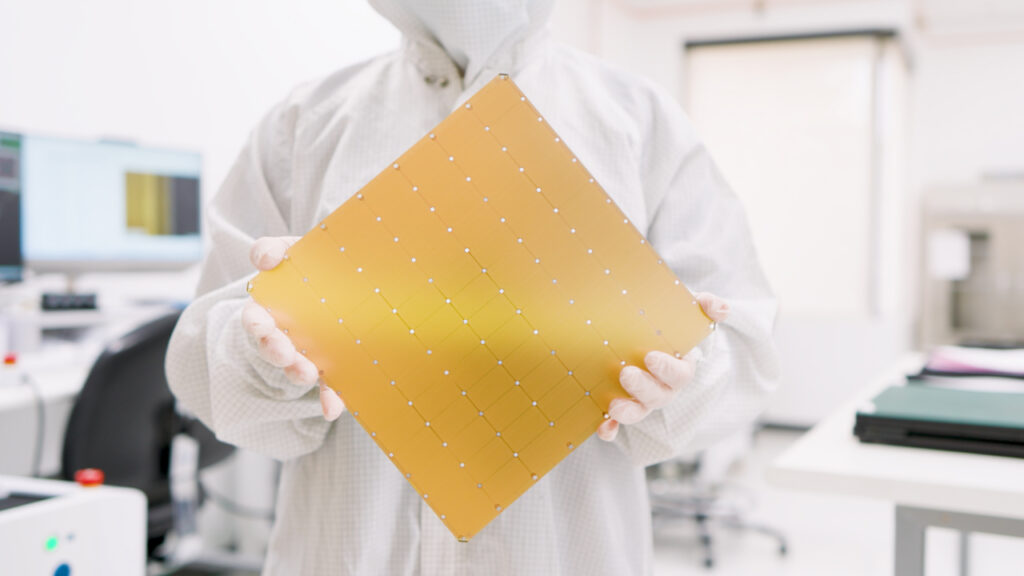
Cerebras’ Wafer-Scale Engine takes a fundamentally different approach to inference hardware. Rather than relying on high-bandwidth memory attached to a conventional GPU die, the WSE uses a wafer-sized processor with on-chip SRAM — an architecture designed to minimize external-memory bottlenecks during token generation. General Compute says it selected Cerebras specifically for workloads where per-token latency is the principal constraint.
The distinction matters most during the decode phase of inference, where a model generates output tokens one at a time in sequence. On a conventional Nvidia GPU, decode can be bottlenecked by memory bandwidth. Each token requires reading the model’s weights and the accumulated key-value cache from HBM, and small-batch workloads don’t generate enough parallelism to fully utilize the GPU’s compute capacity. Cerebras claims its SRAM-based architecture sidesteps that bottleneck by keeping data on-chip, reducing the round trips to external memory that slow sequential generation. “In AI, speed is productivity,” said Cerebras CTO and co-founder Sean Lie. “An agent that takes hundreds of steps to finish a task is only as fast as its slowest step.”
Cerebras’ advantage is also most relevant to a particular inference profile — latency-sensitive, single-user or small-batch decode. For high-throughput batch inference, where providers can amortize memory access across many concurrent requests, Nvidia GPUs remain highly competitive. And for training workloads, wafer-scale inference hardware isn’t the right tool at all. The value proposition is narrow by design, which is either a focused strategy or a limitation, depending on how much of the inference market actually fits that profile.
How the stack will work
General Compute isn’t ditching Nvidia. The company is describing a disaggregated inference architecture that splits the pipeline across specialized hardware. Its website pairs Nvidia GPUs with prompt prefill — the compute-intensive, highly parallel processing of the input context — and a decode tier that lists Cerebras alongside SambaNova, Positron, and d-Matrix. Cerebras is one of four decode options there, not a designated Nvidia counterpart. General Compute’s August white paper describes the move to that disaggregated stack in Q4 2026, ahead of the Q1 2027 customer availability, without naming the vendors involved.
The approach reflects a broader trend in AI infrastructure toward matching hardware to specific pipeline stages rather than running everything on one type of GPU. Prefill is embarrassingly parallel and benefits from the raw compute throughput that Nvidia’s GPUs excel at. Decode is sequential and memory-bound, which is where Cerebras claims its SRAM architecture offers an edge. “The chips that win inference are not going to come from one vendor, and most customers cannot put a wafer-scale system on their own balance sheet,” said Puklowski. “That is the gap we exist to close.”
Splitting inference across two backends introduces real complexity, though. Coordinating KV-cache transfers between prefill and decode backends, managing cross-fabric scheduling, and maintaining reliability and monitoring across fundamentally different architectures isn’t trivial. If the interconnect overhead or orchestration layer isn’t tightly engineered, the latency gains from faster decode could be partially or fully eroded by the cost of moving data between systems.